

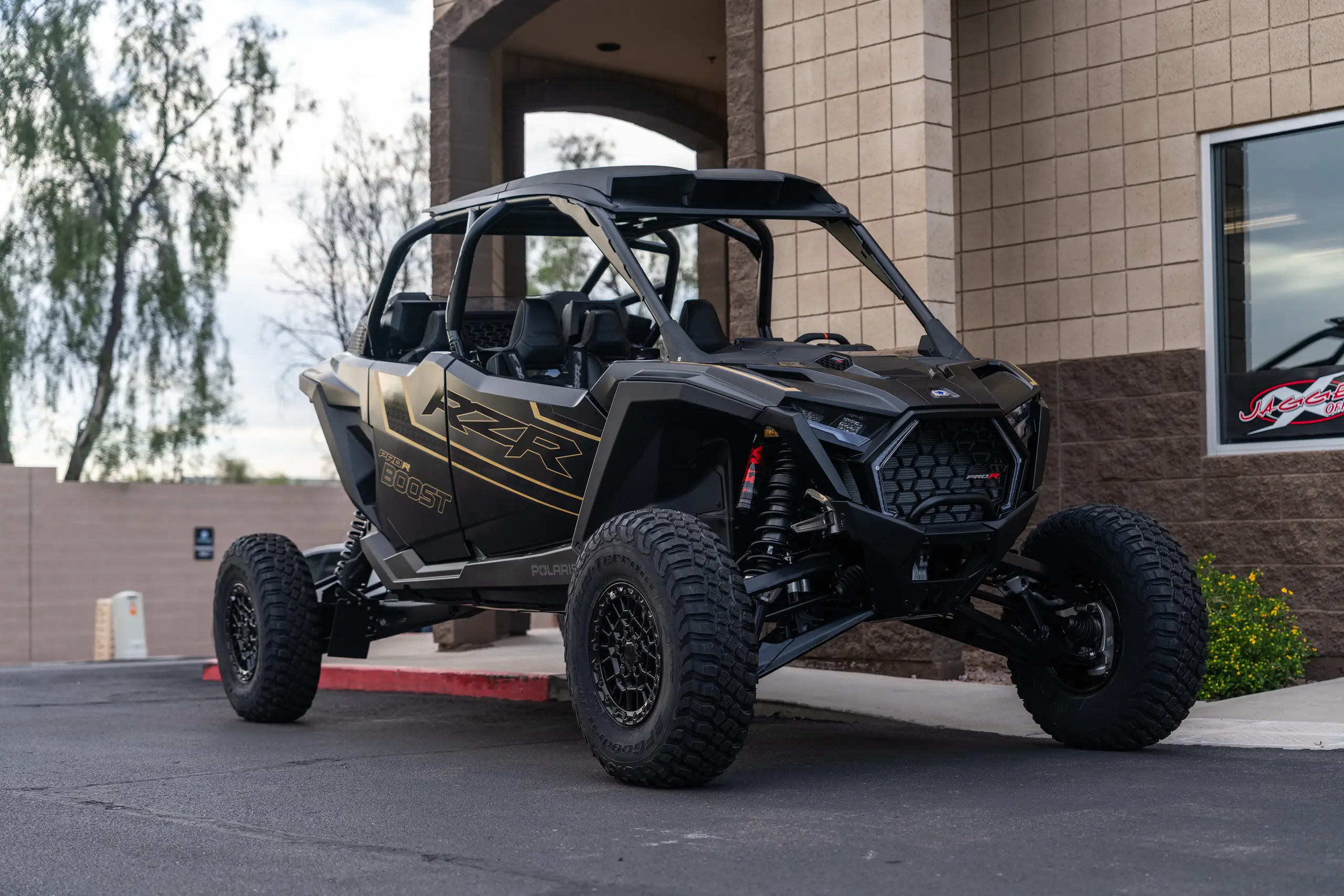
The 2027 Polaris RZR Pro R Boost is here, and ours is a Pro R 4 Boost Ultra in black and gold. It's our new shop car, and we've been wrenching on Polaris RZRs for over 20 years, so we know what to look for when a new one rolls in.
2027 Polaris RZR Pro R Boost Review
We walk the car and point out everything new we spotted, along with what the Polaris engineers told us when we asked them the questions everybody's going to have. If you're here for the numbers, the full spec sheet, a Pro R 4 Ultimate vs. Pro R 4 Boost Ultimate comparison chart and a system-by-system rundown of the 2027 changes are further down.
Metallic Paint and Details You Might Miss
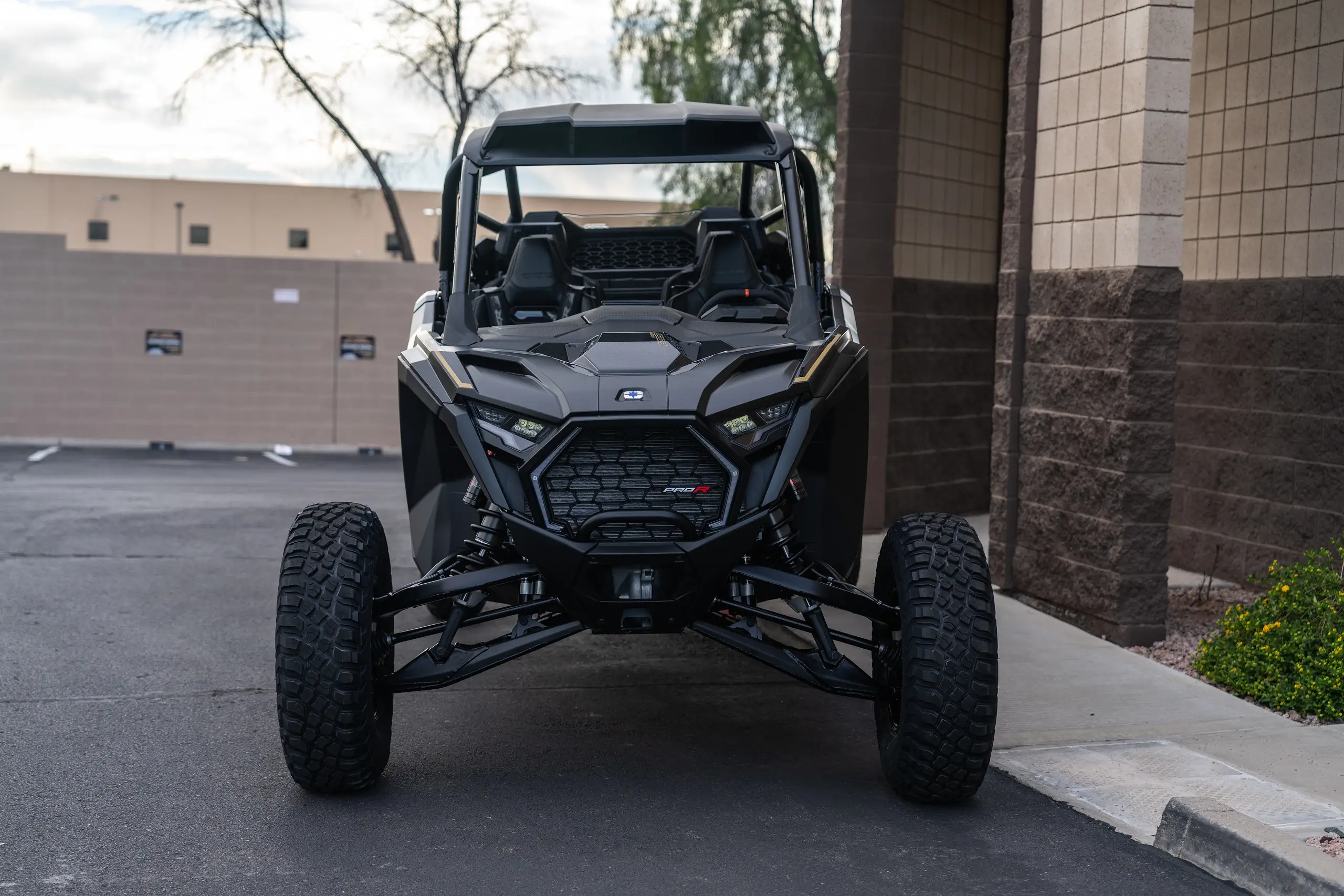
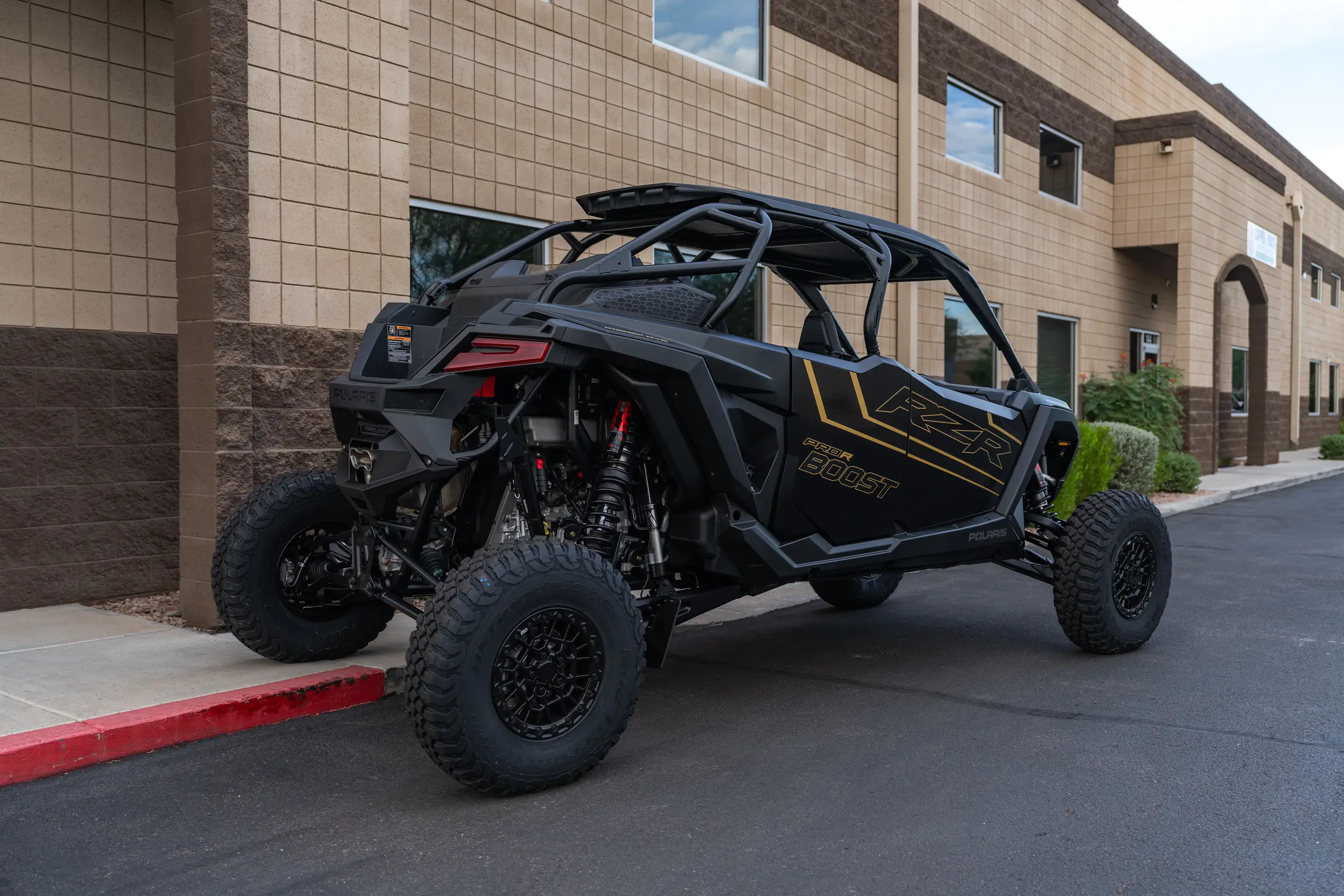
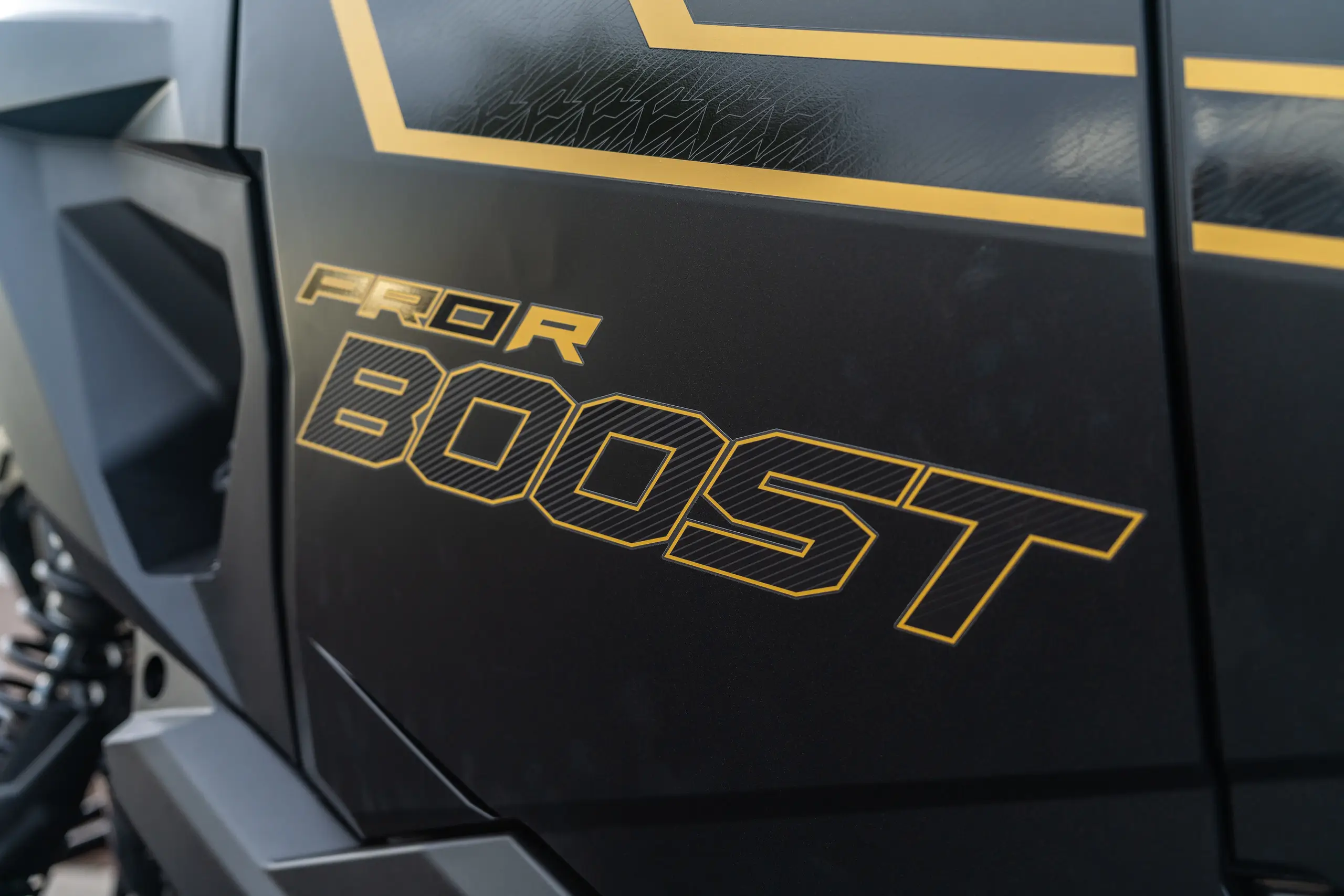
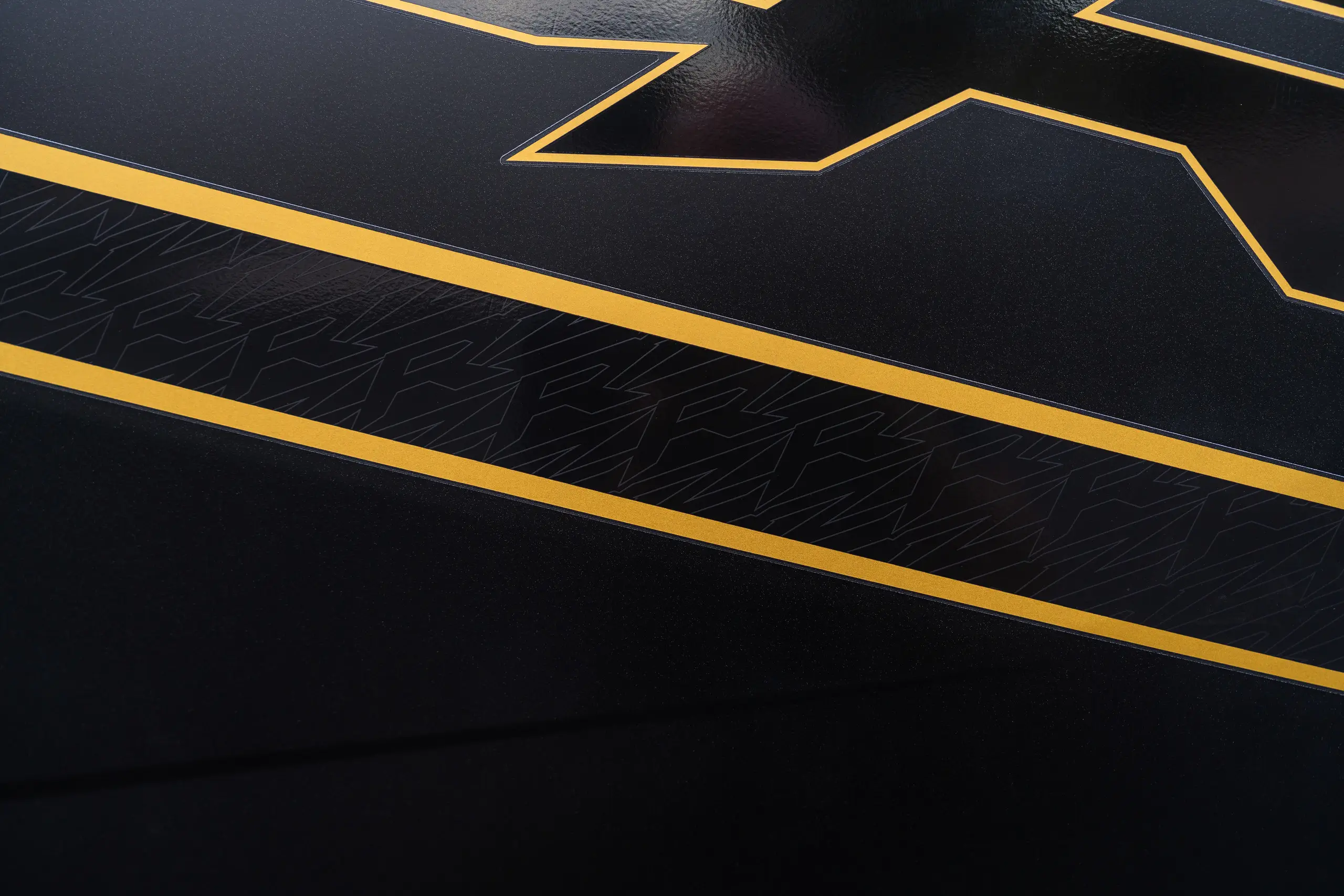
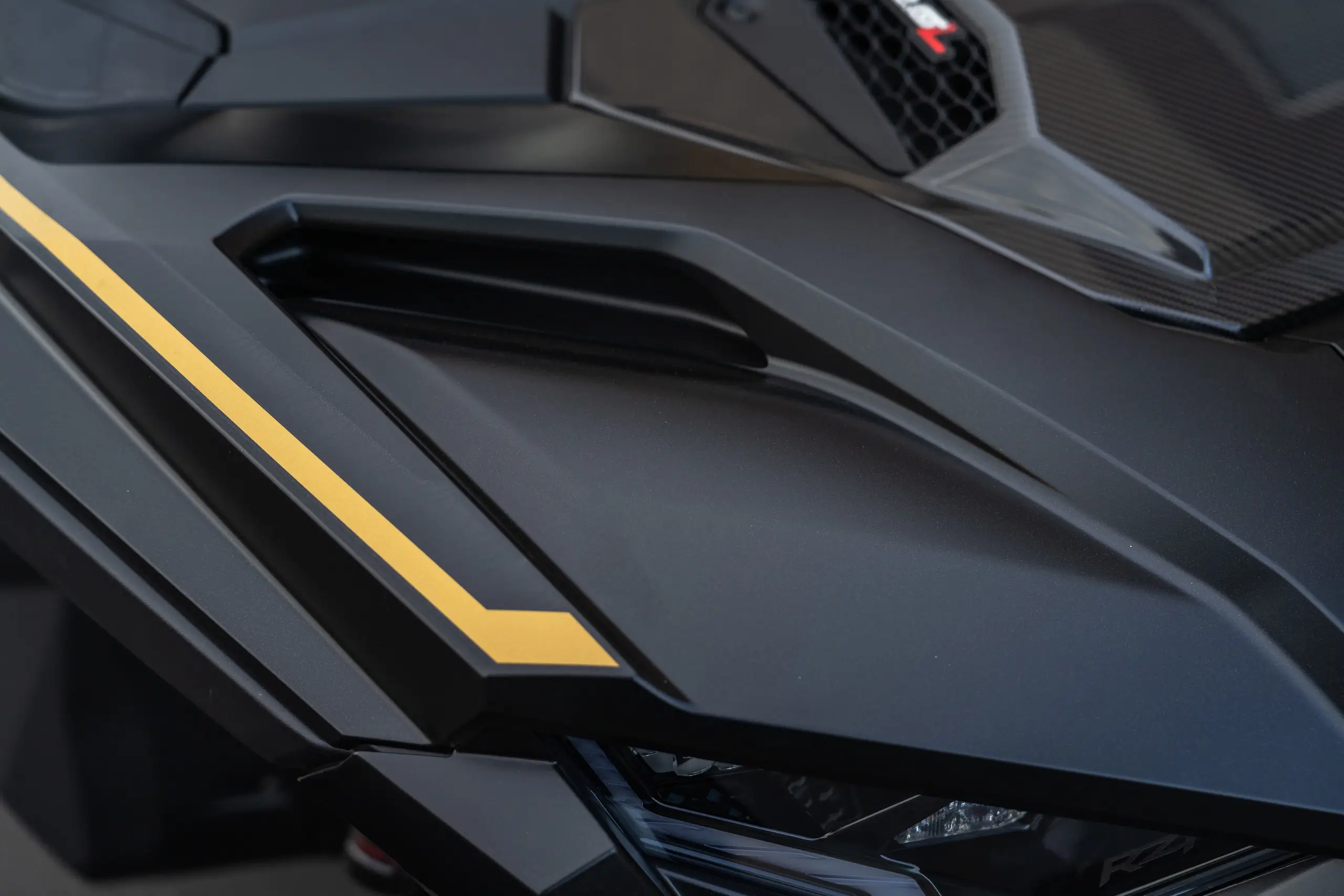
At first glance the paint looks a lot like the stealth Pro R from 2022. Get closer and there's a lot of metallic in it.
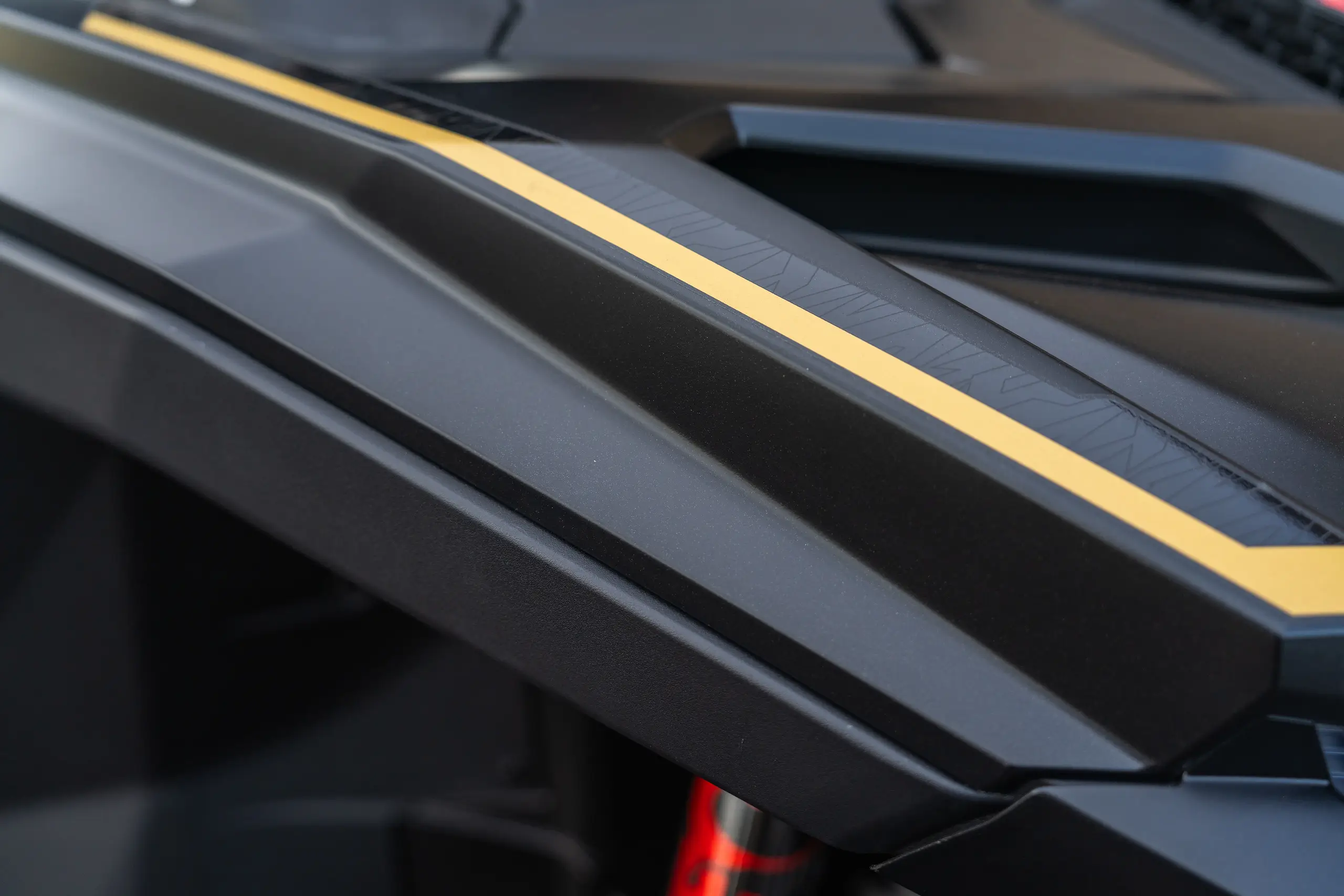
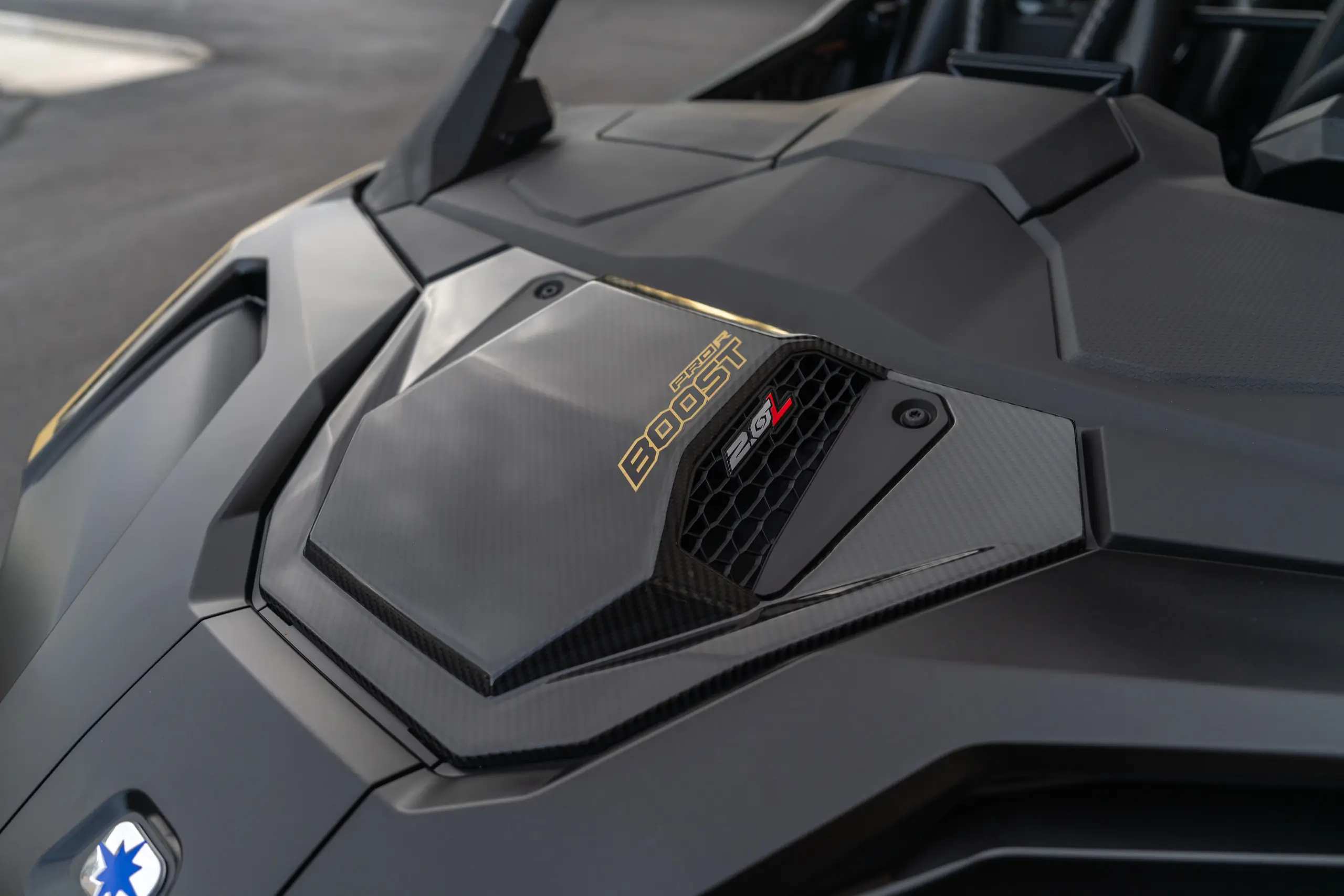
Polaris put little details everywhere on this car. The black decal running up the side has the RZR name silhouetted all the way up it. You might never see it unless you're looking for it, but once you spot it, it's a cool touch. Even the Boost badge on the door is done in a carbon fiber look.
Gloss Carbon Fiber Hood and Seat Inlays
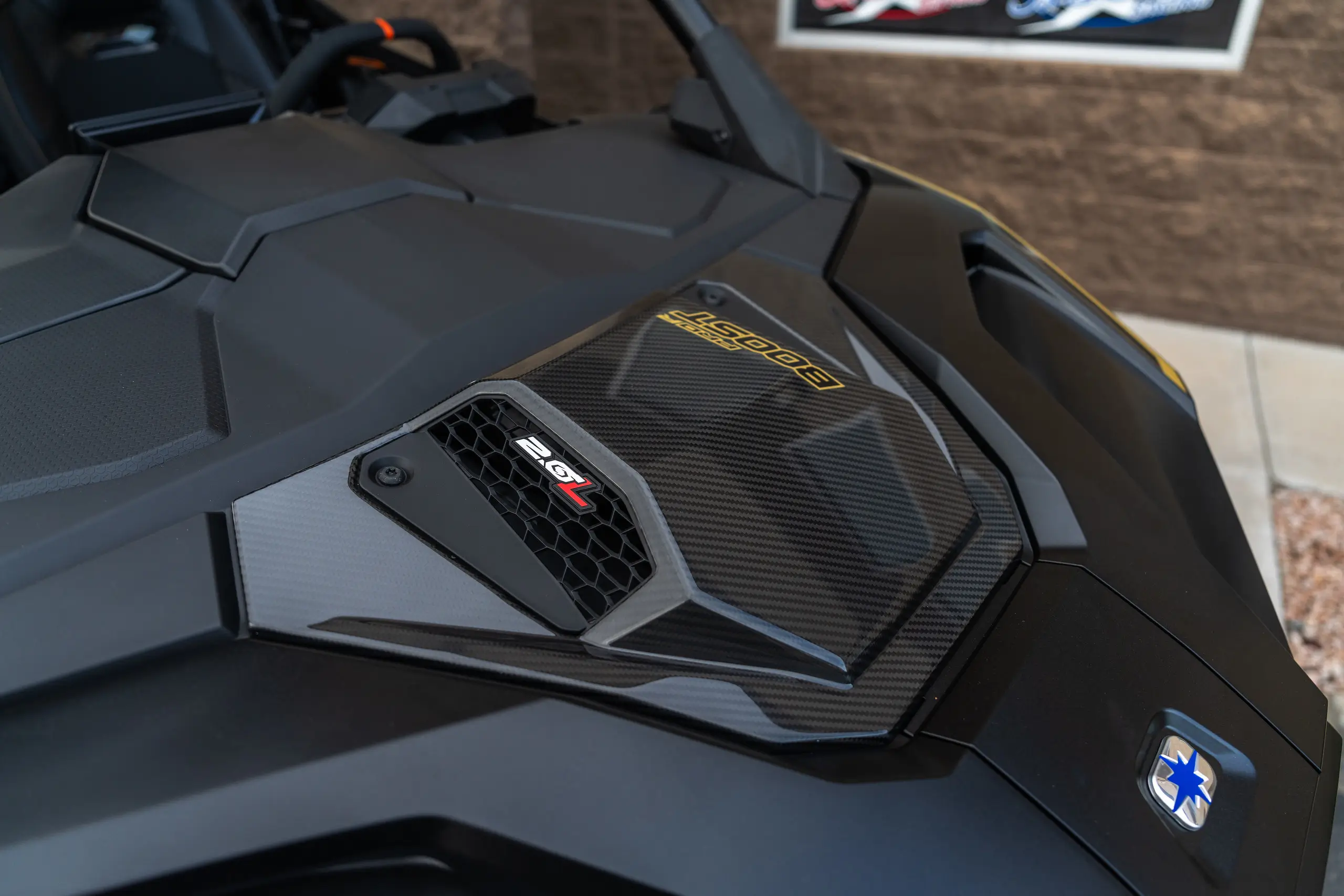
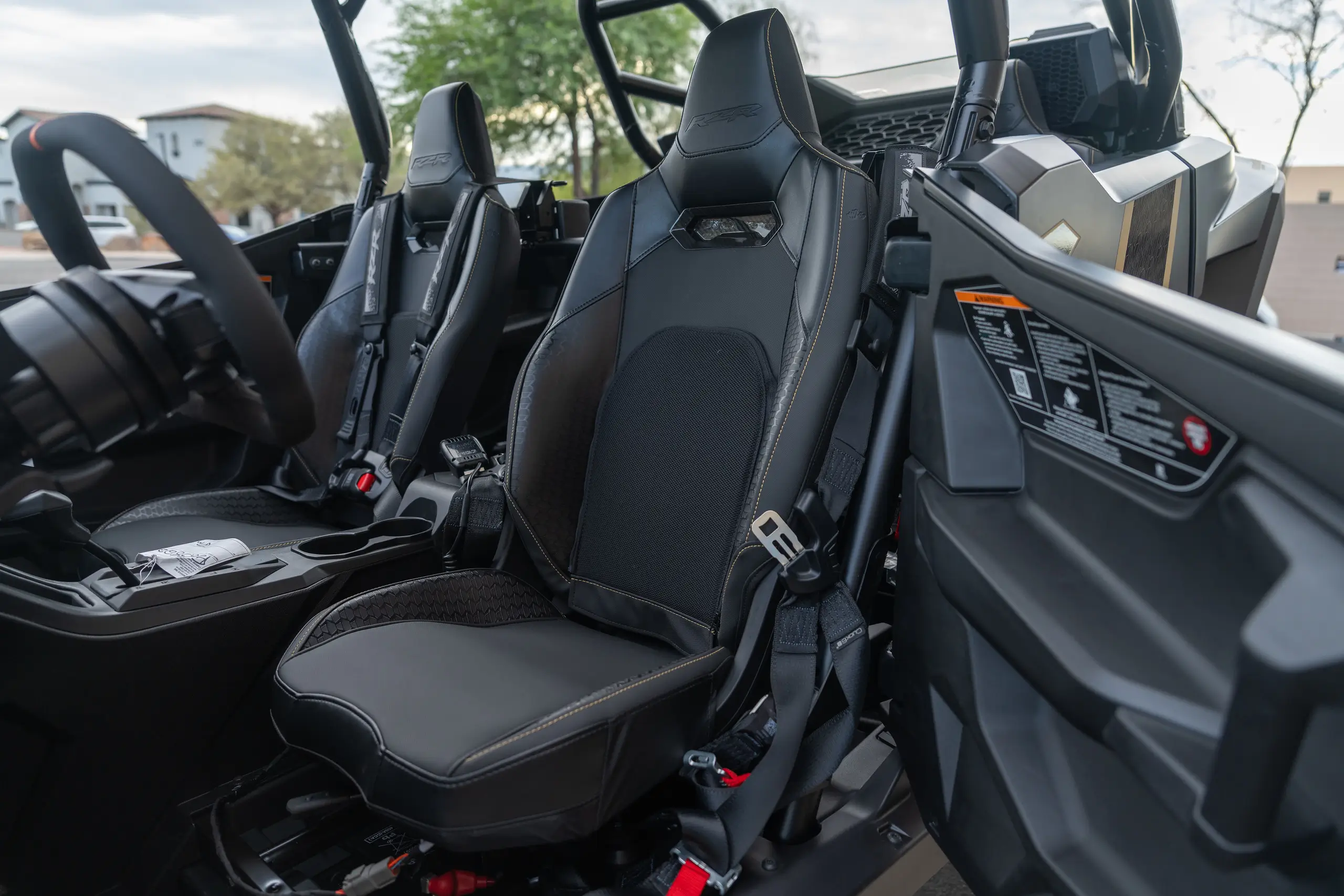
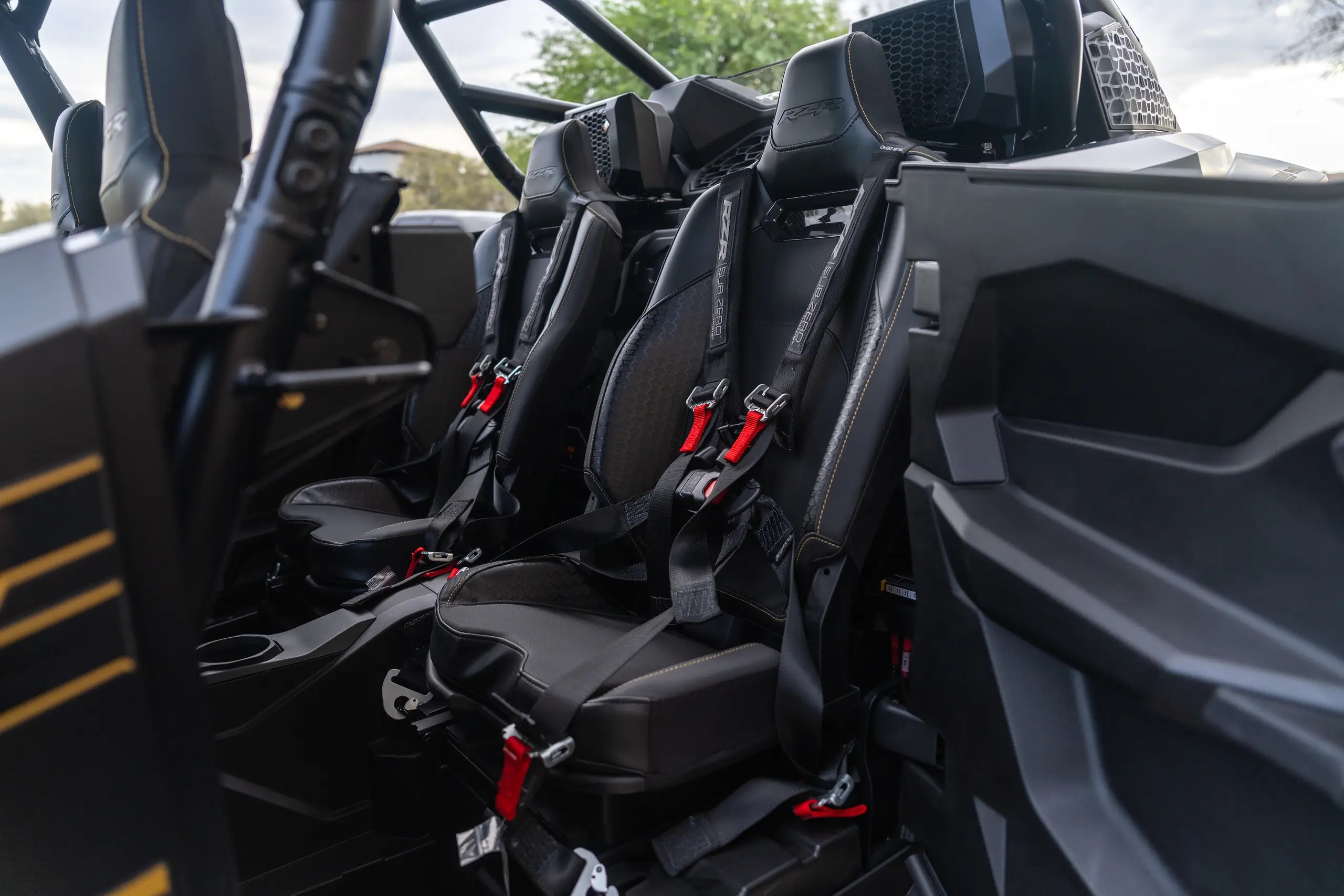
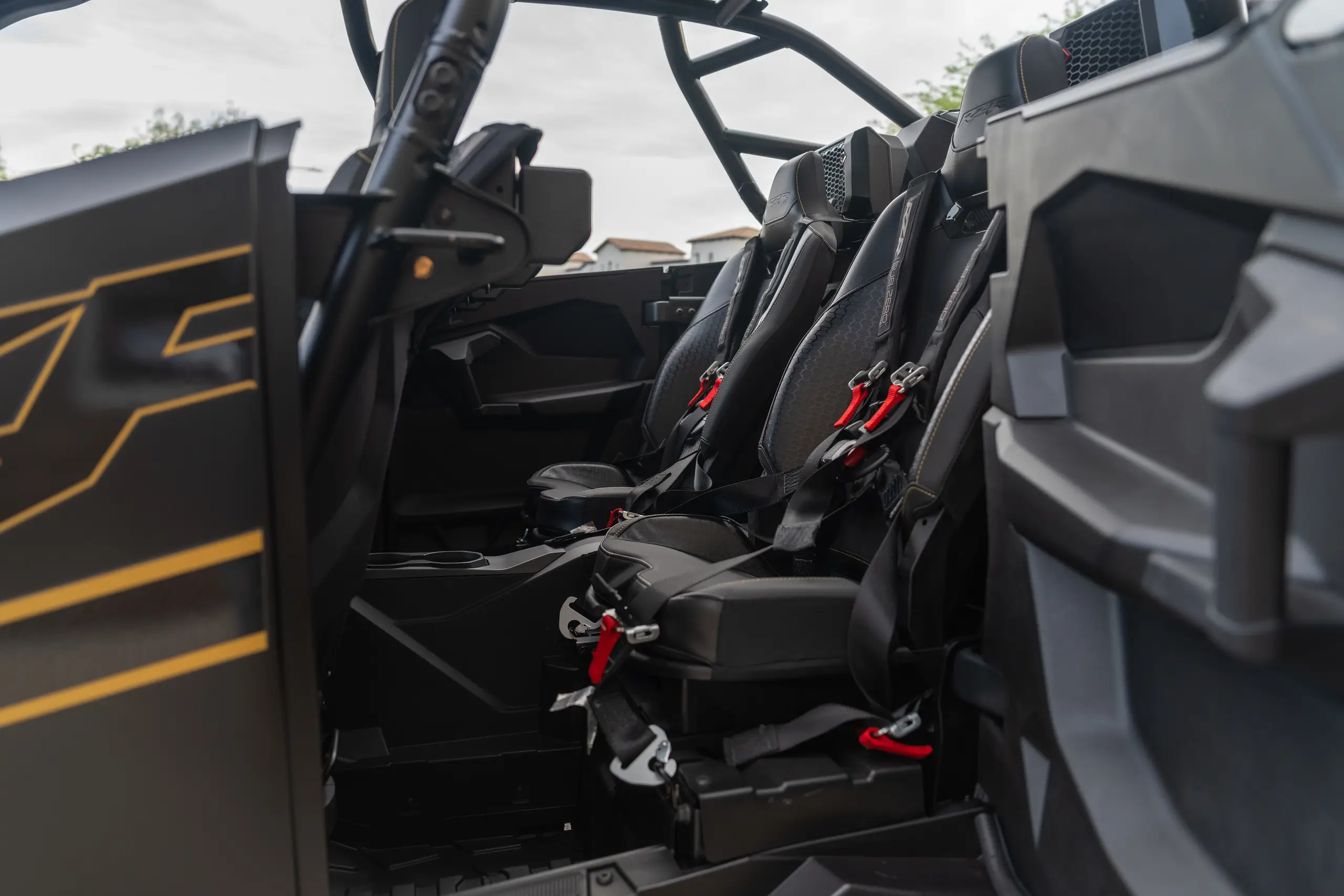
The carbon fiber is one of our favorite parts of this car. The hood is real gloss carbon fiber, and there are carbon fiber inlays in the seats too.
Polaris is also selling carbon fiber accessories on their website, like buttons for the steering wheel. Expect the aftermarket to go crazy with carbon on these cars. Carbon fiber looks good and it's light, and the Pro R Boost is the car you want to do that on.
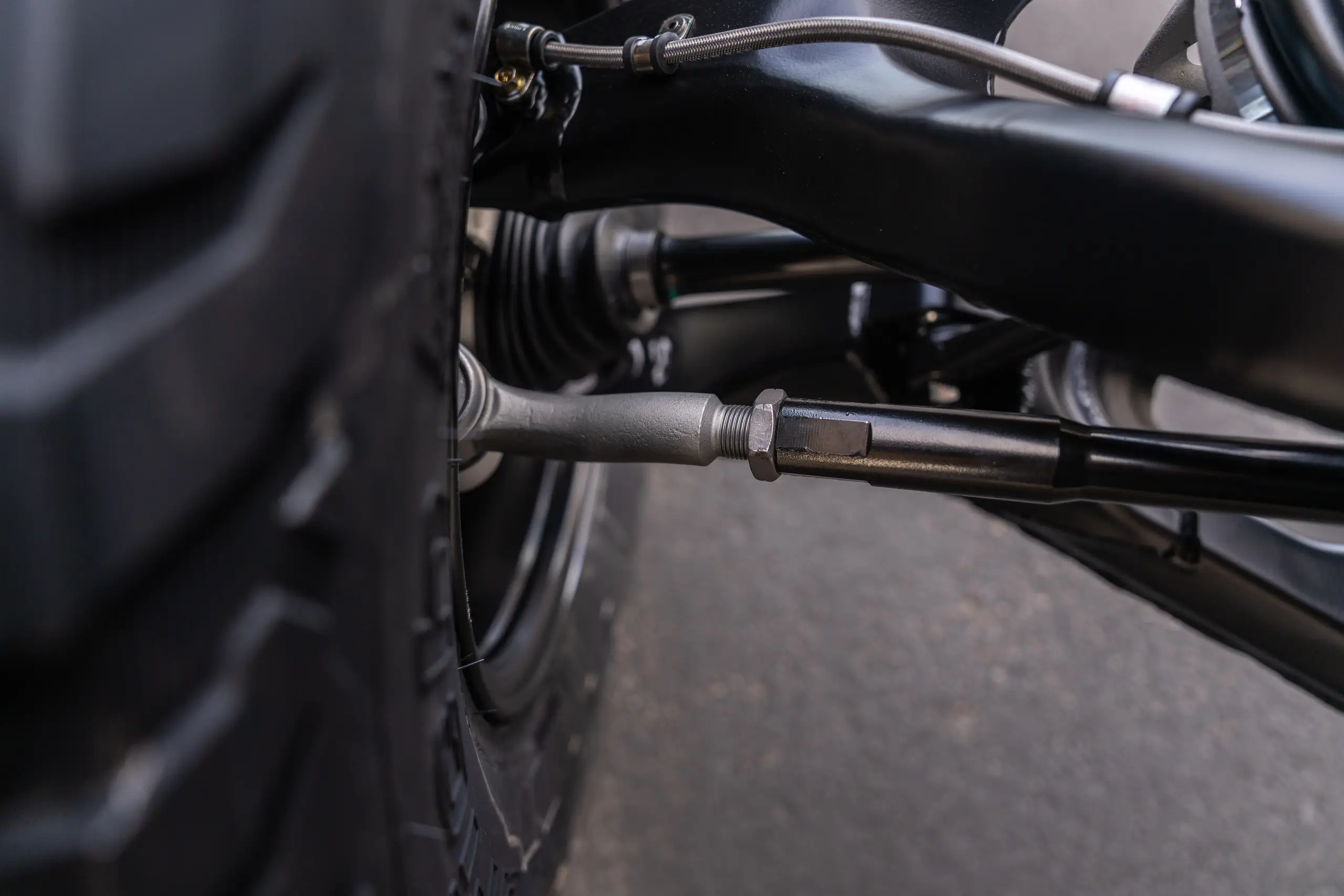
New 3-Piece Tie Rods
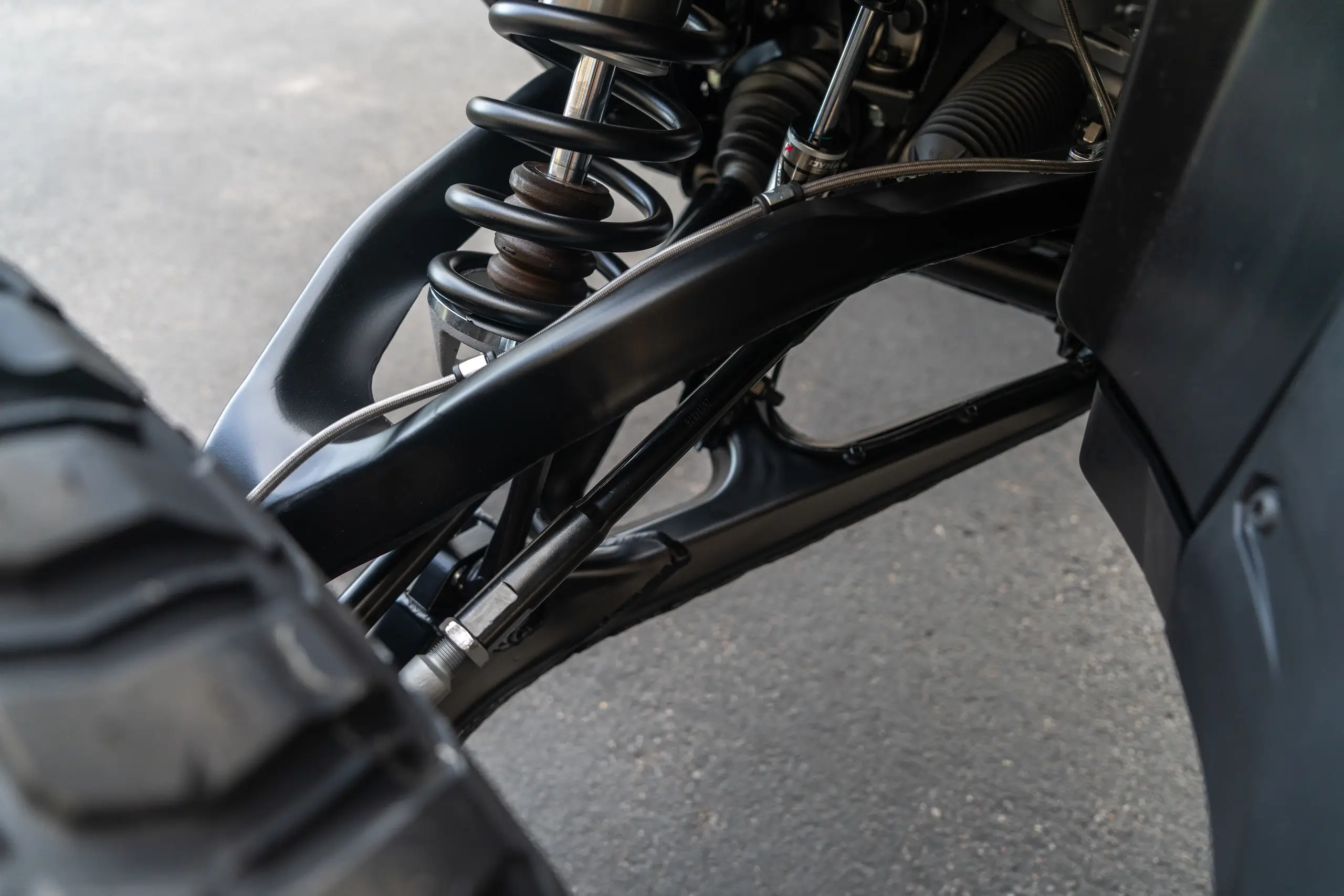
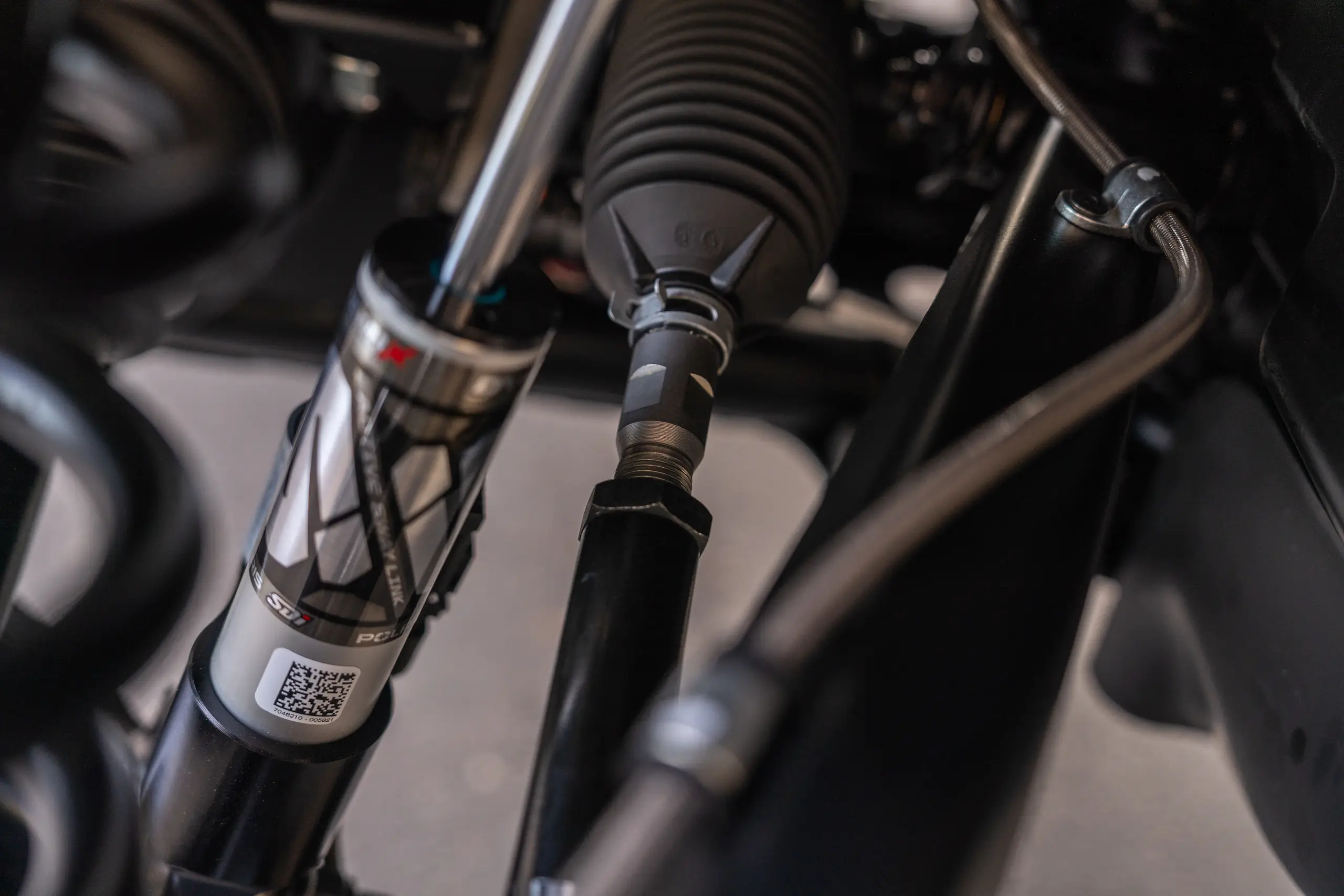
Since we've been working on Pro Rs from the day they came out, a couple of changes jumped out right away. The first one is the tie rods.
The old setup was an inner tie rod coming off the steering rack and an outer tie rod. The 2027 uses what we'd call a 3-piece design: an inner tie rod joint, an outer tie rod joint, and a new tie rod in between. It looks very strong. Polaris probably did it for strength, and it likely holds toe better too. You also get adjustability on both ends.
A Stiffer Frame on Every 2027 Pro R
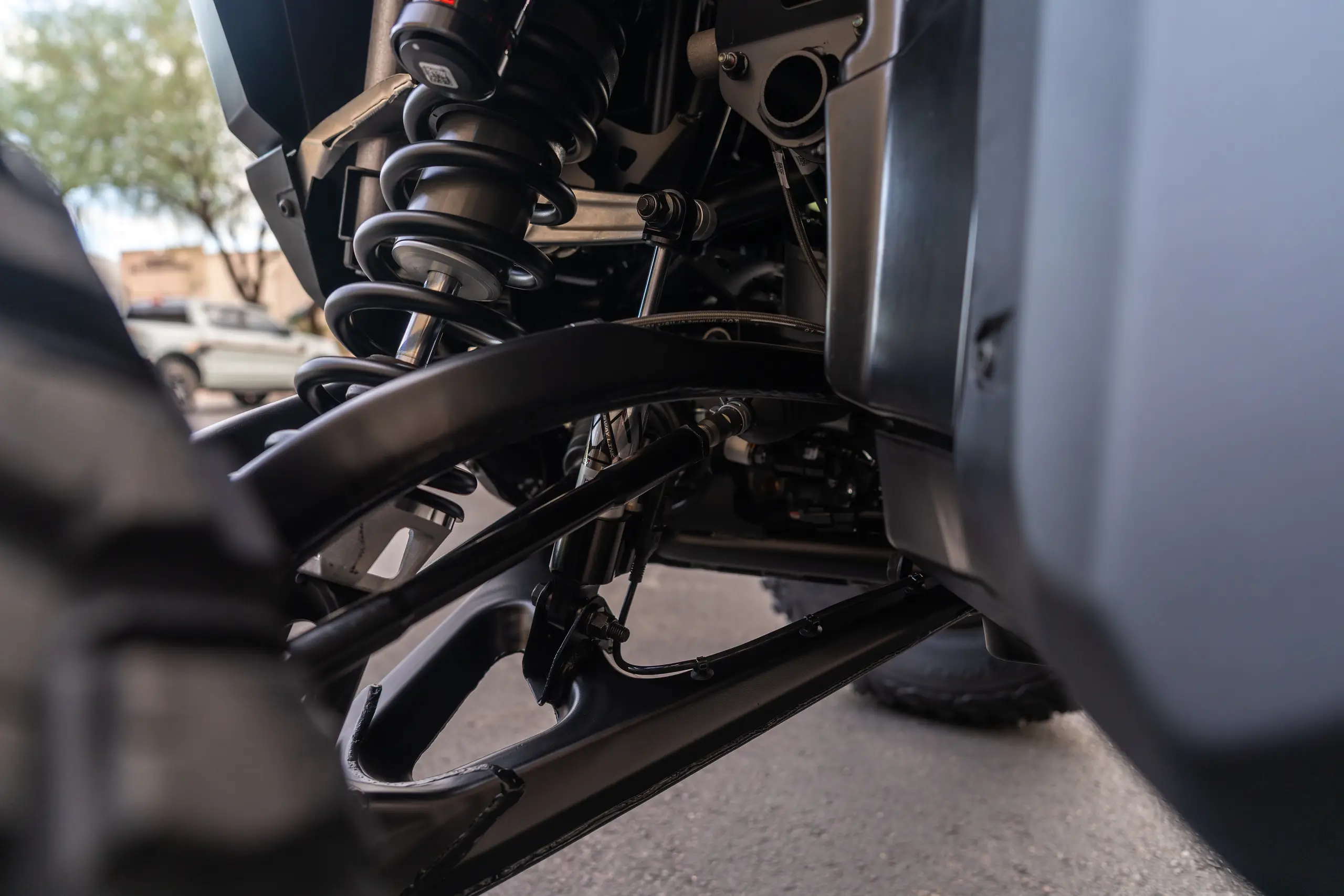
Every 2027 Pro R, Boost or not, gets a stiffer frame than the previous cars. It's hard to point to exactly where by looking at it, but it's probably somewhere in the rear end to handle the turbo and the extra horsepower.
One Cooler Up Front, Radiator in the Back
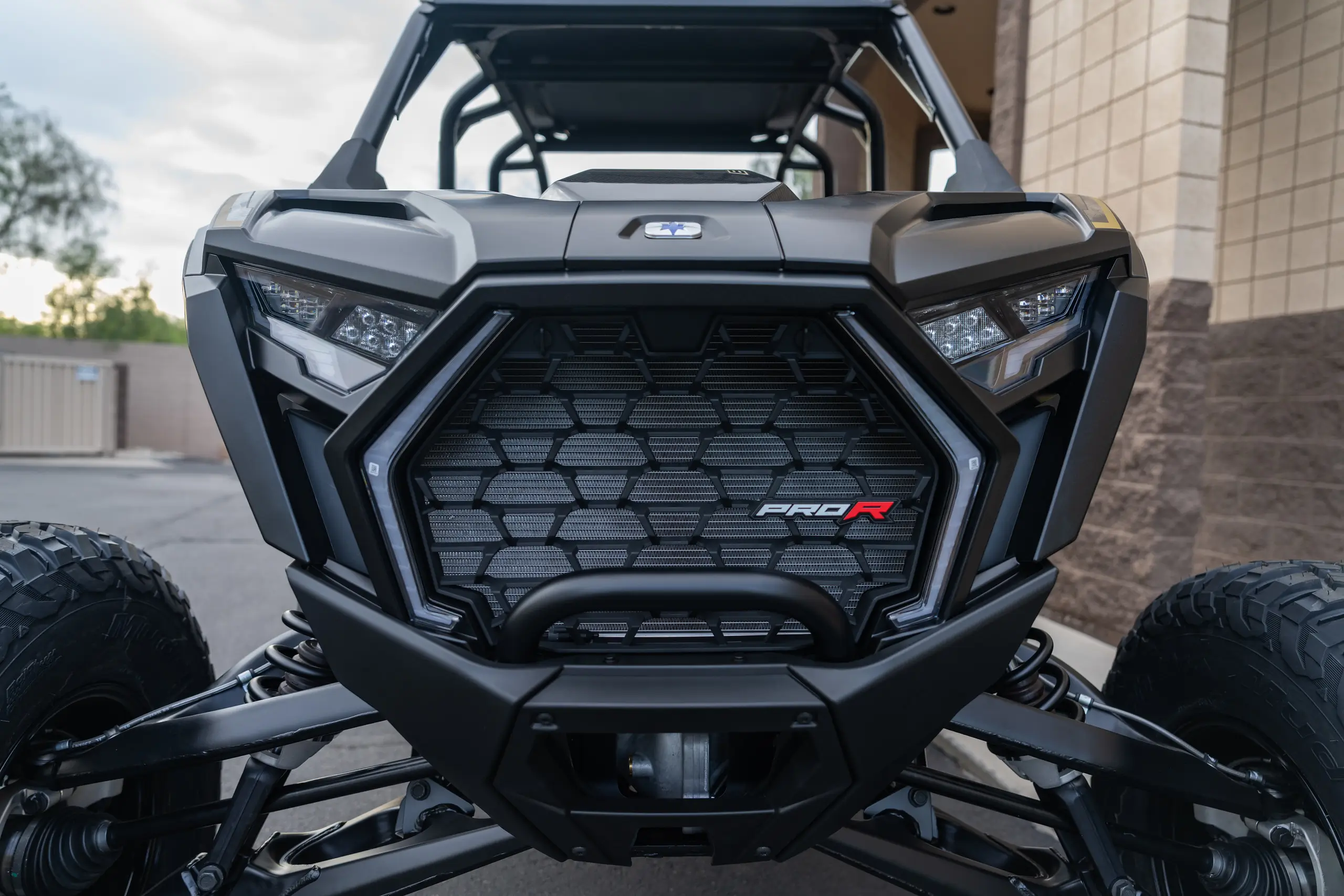
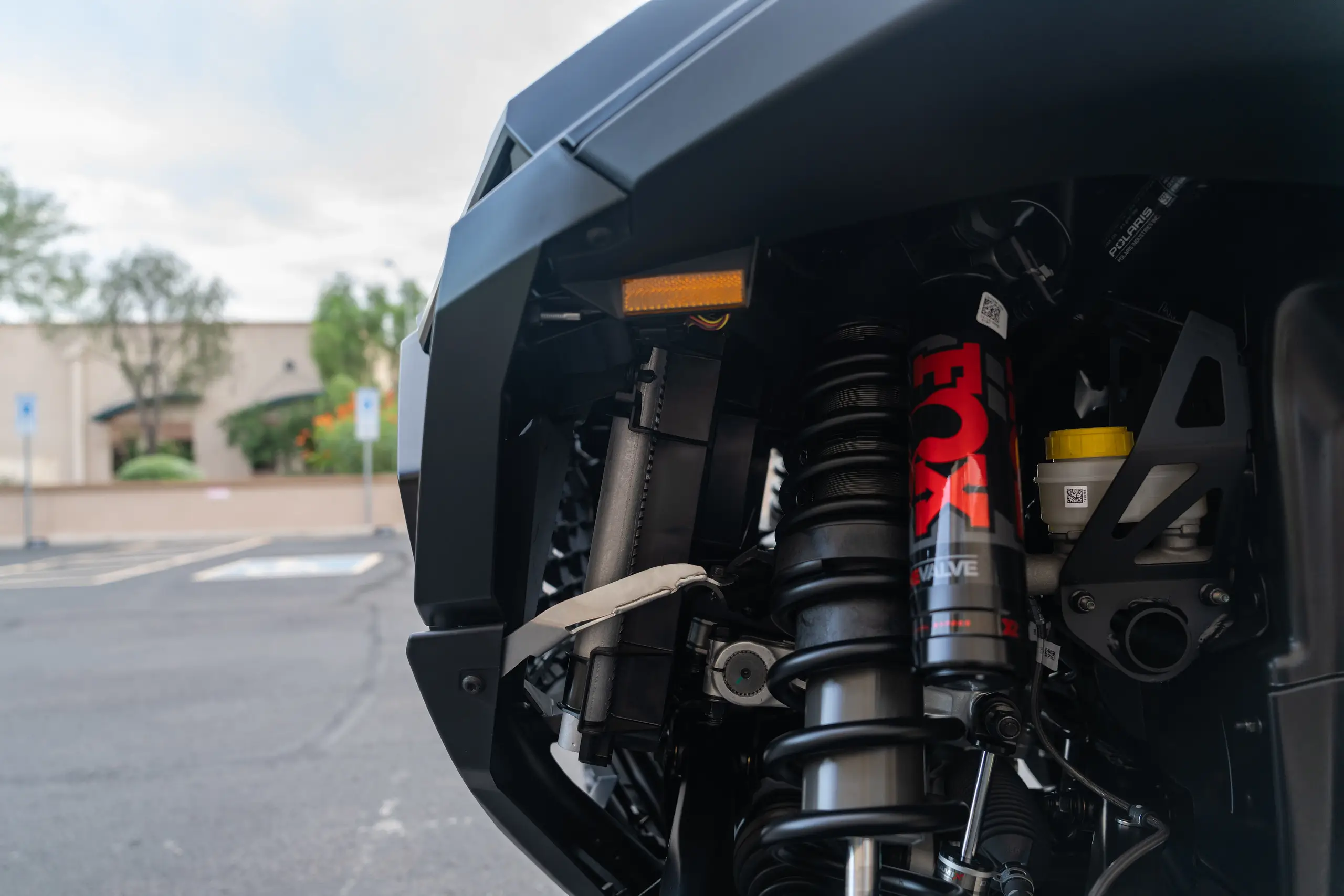
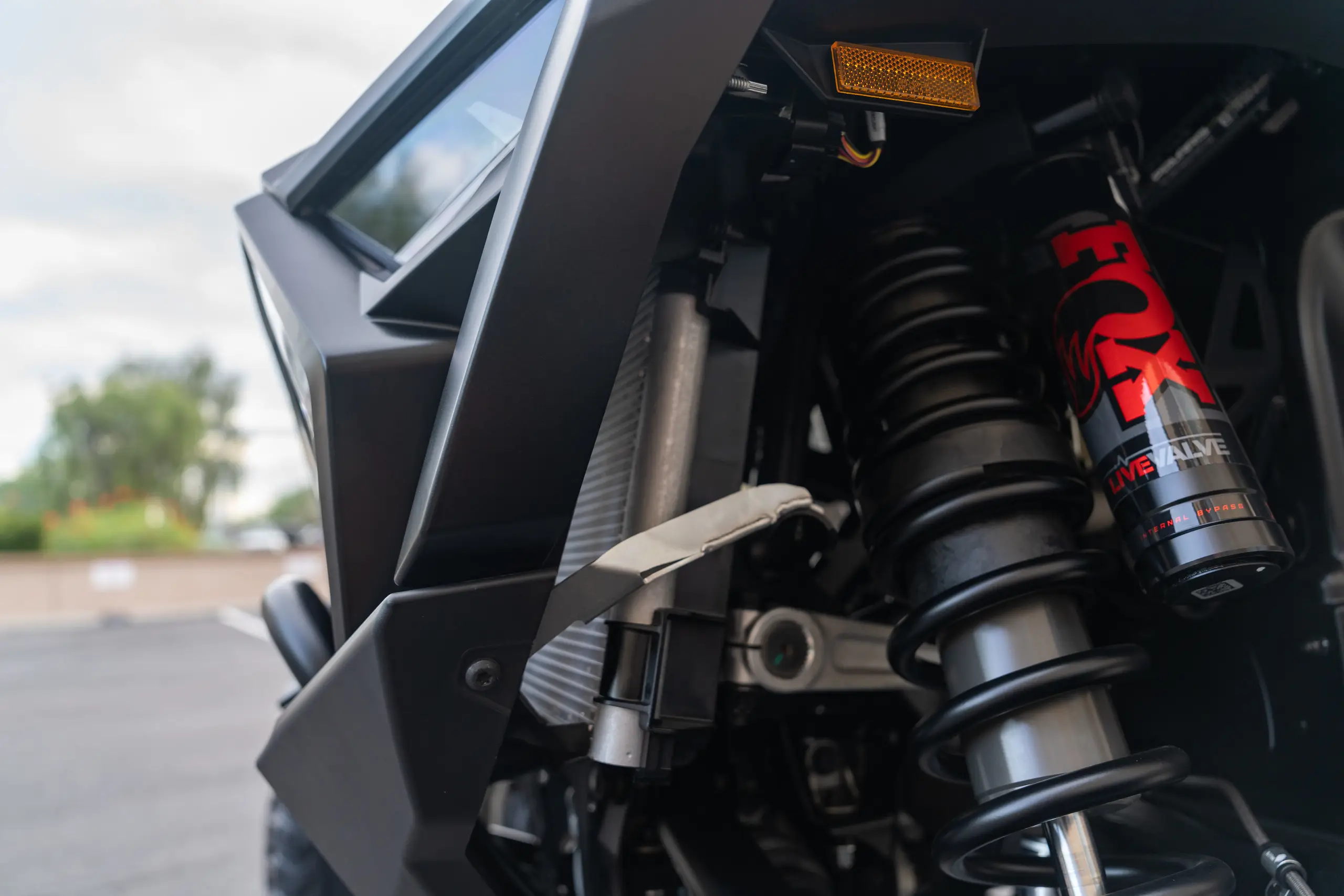
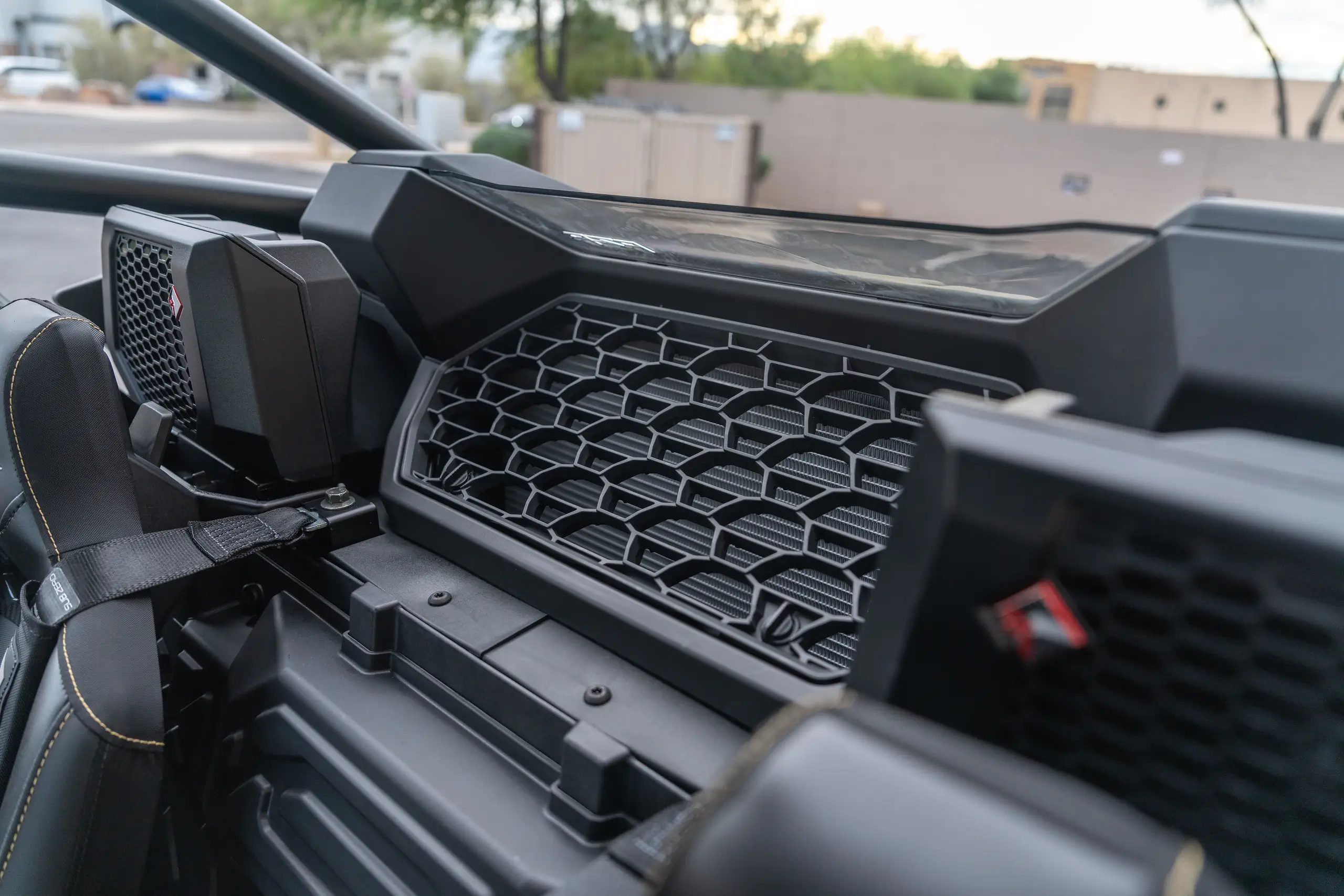
You probably won't notice it on video, but there's only one cooler up front now. The engine radiator moved to the back of the car, and the front handles cooling for the transmission and the turbo intercooler.
That move should cut down on the cab heat that used to come through the center console.
New Center Console, Bigger Fuel Tank and Seats
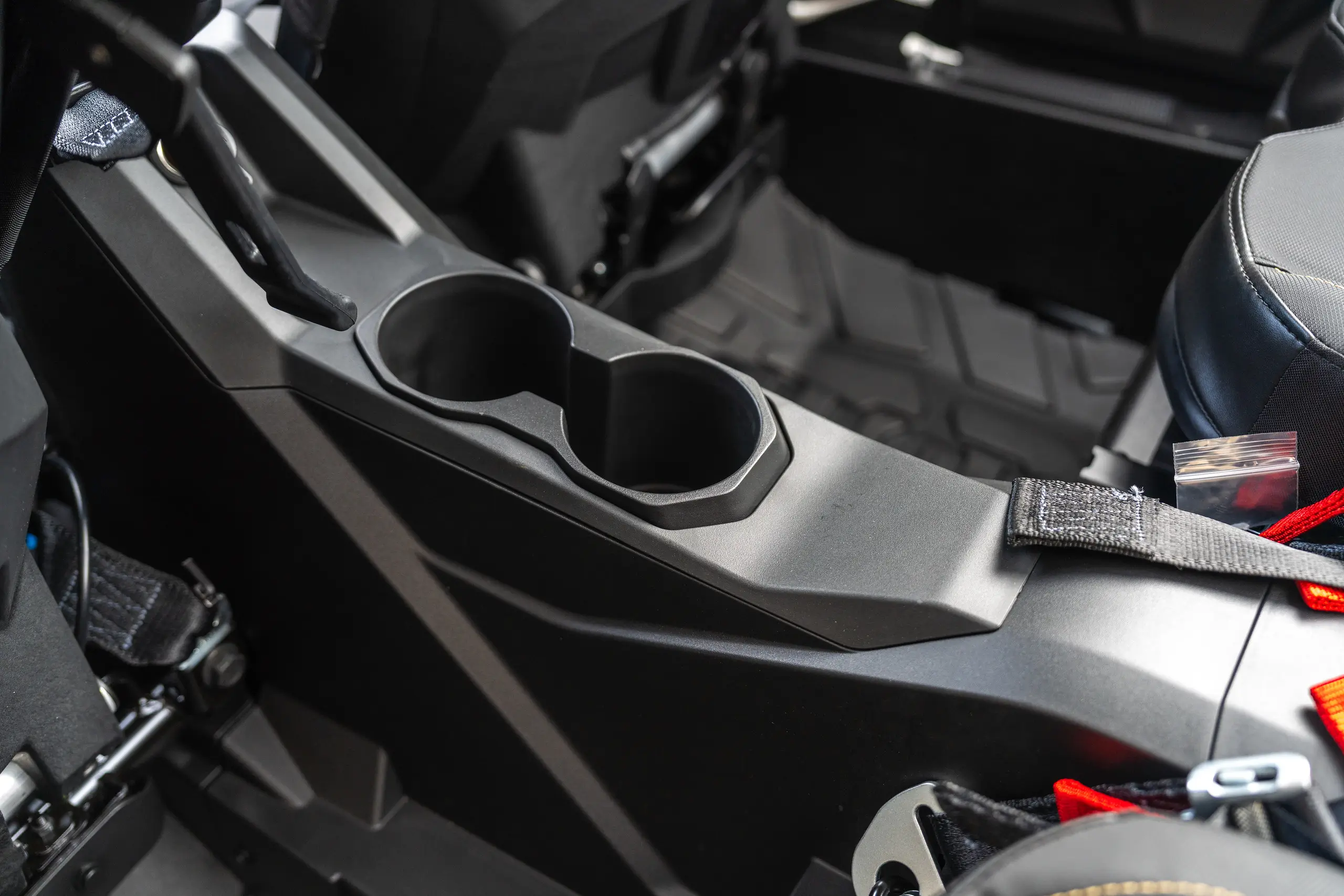
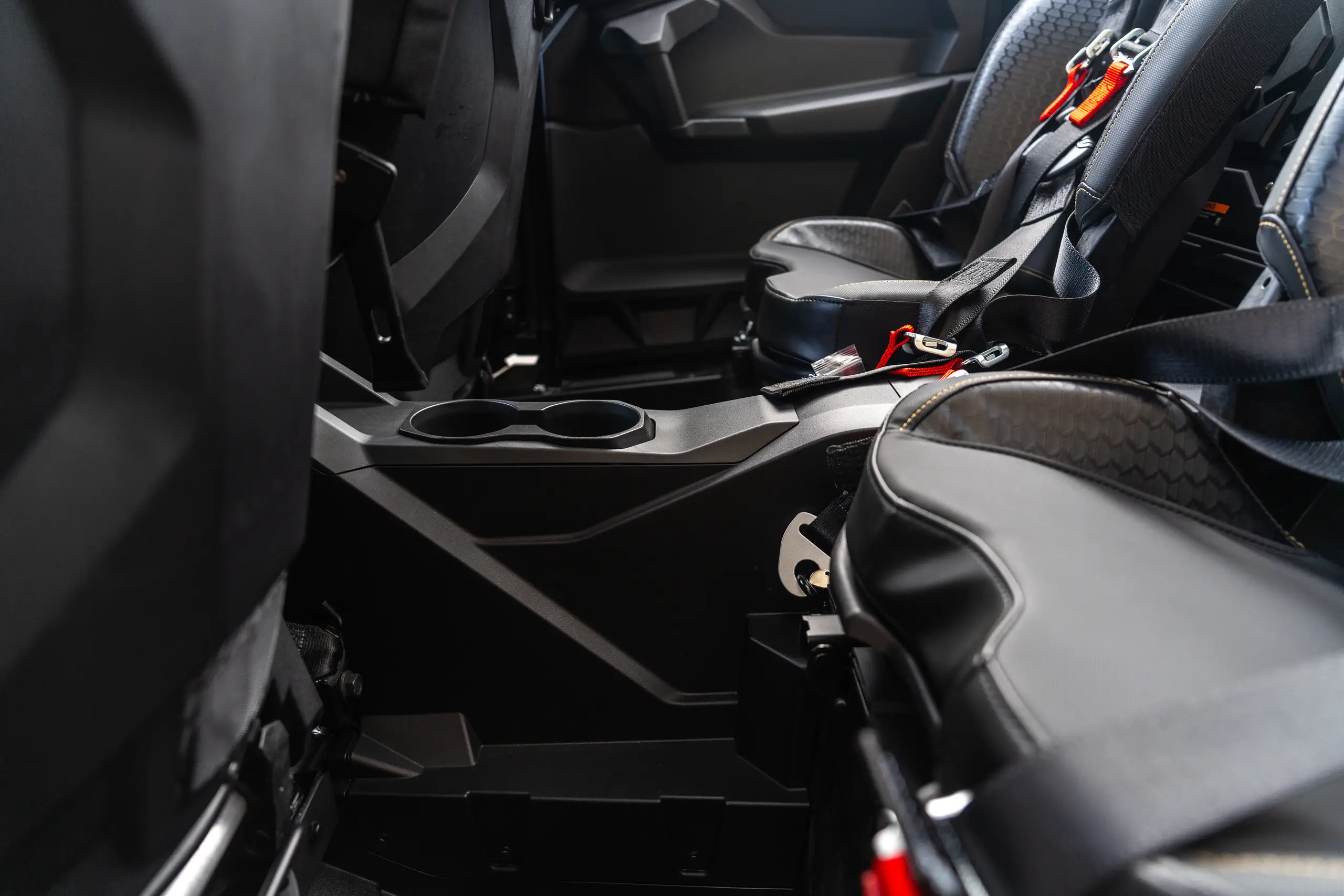
Speaking of the center console, it's one of the bigger changes inside. The rear console has different forming that looks really clean, and it just feels higher end. Fit and finish are really good.
Our guess is that the console redesign makes room for the bigger fuel tank. The 2027 Pro R 4 holds 17.4 gallons, up from 12.3 on the 2026.
The seats are still heated and cooled, and besides the carbon fiber inlays, there's a small design in them that looks like the fang lights on the front grille. Polaris carried that theme all the way through the car.
Rockford Fosgate Stereo, Ready to Go Big
The stereo is the part we're most excited to build on. The car comes with a big Rockford Fosgate system that's already set up for more: prewired for a big subwoofer and door speakers, with the big amp already in the car. You can build a huge stereo in it without starting from scratch.
The Rockford Fosgate rear subwoofer through Polaris accessories fits between the rear seats. It's a backfiring sub that fires toward the firewall and spreads the sound out. We'll definitely have a big stereo in this one. If you want to do the same in yours, hit us up and we'll get you set up.
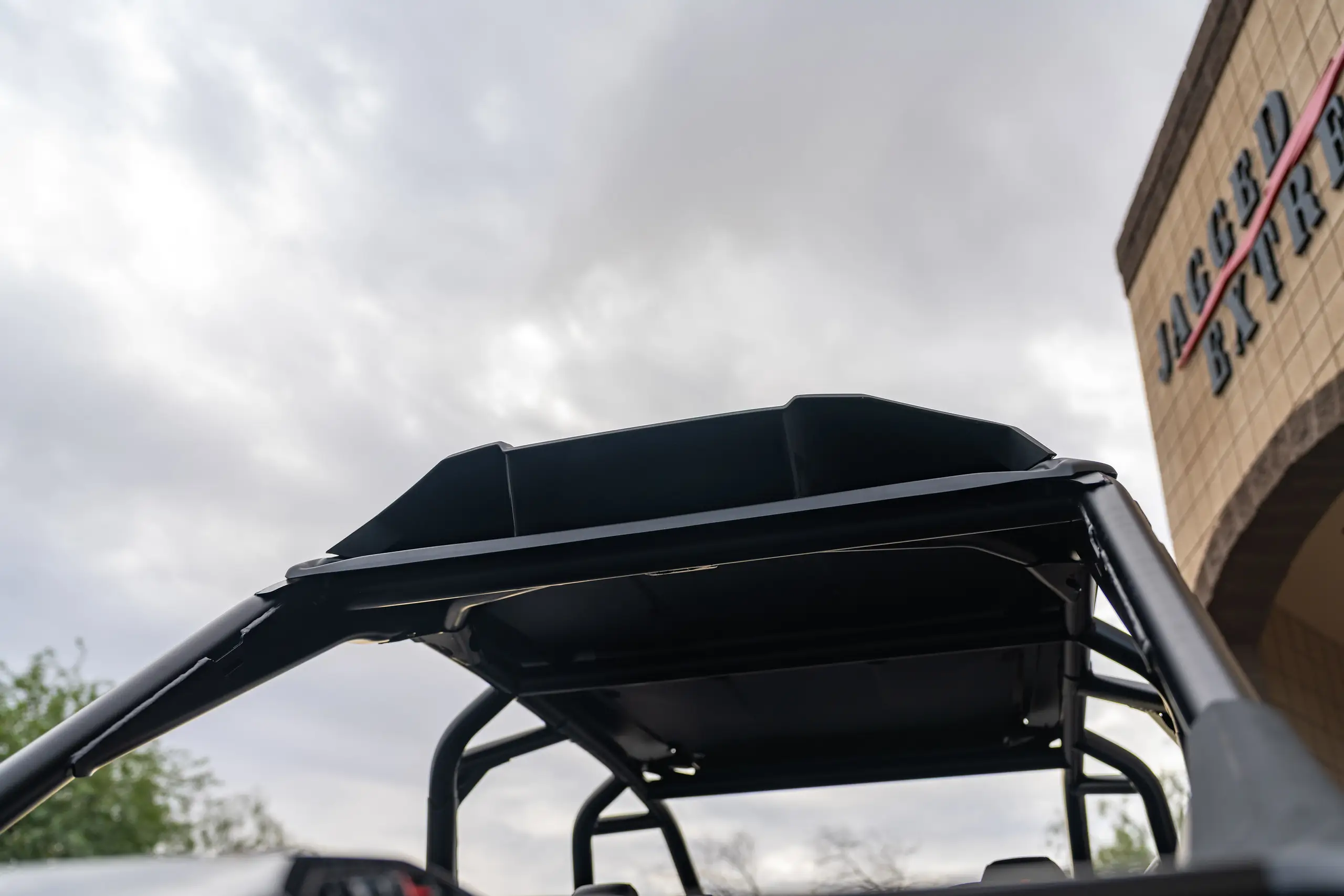
Do You Have to Run the Roof Scoop?
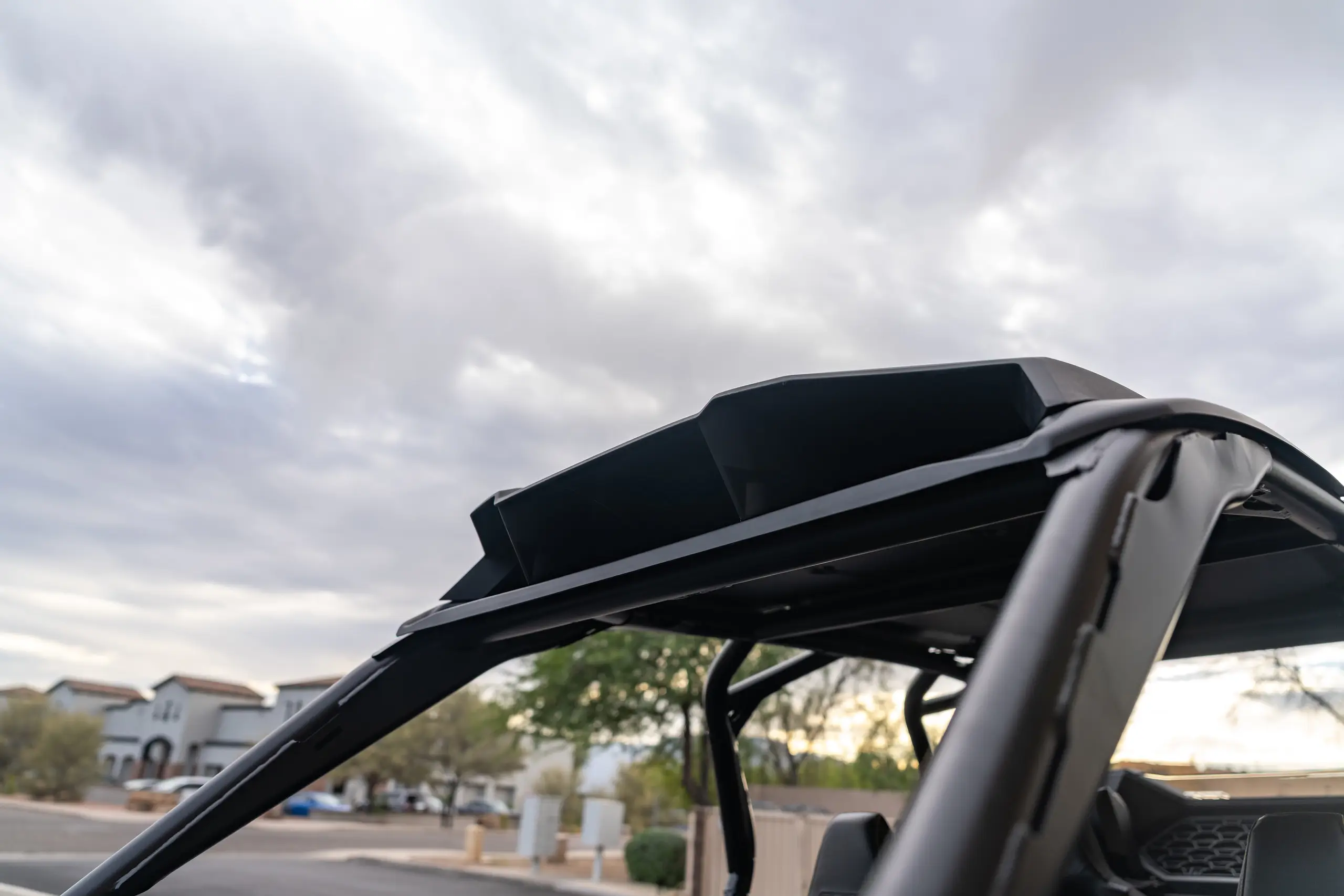
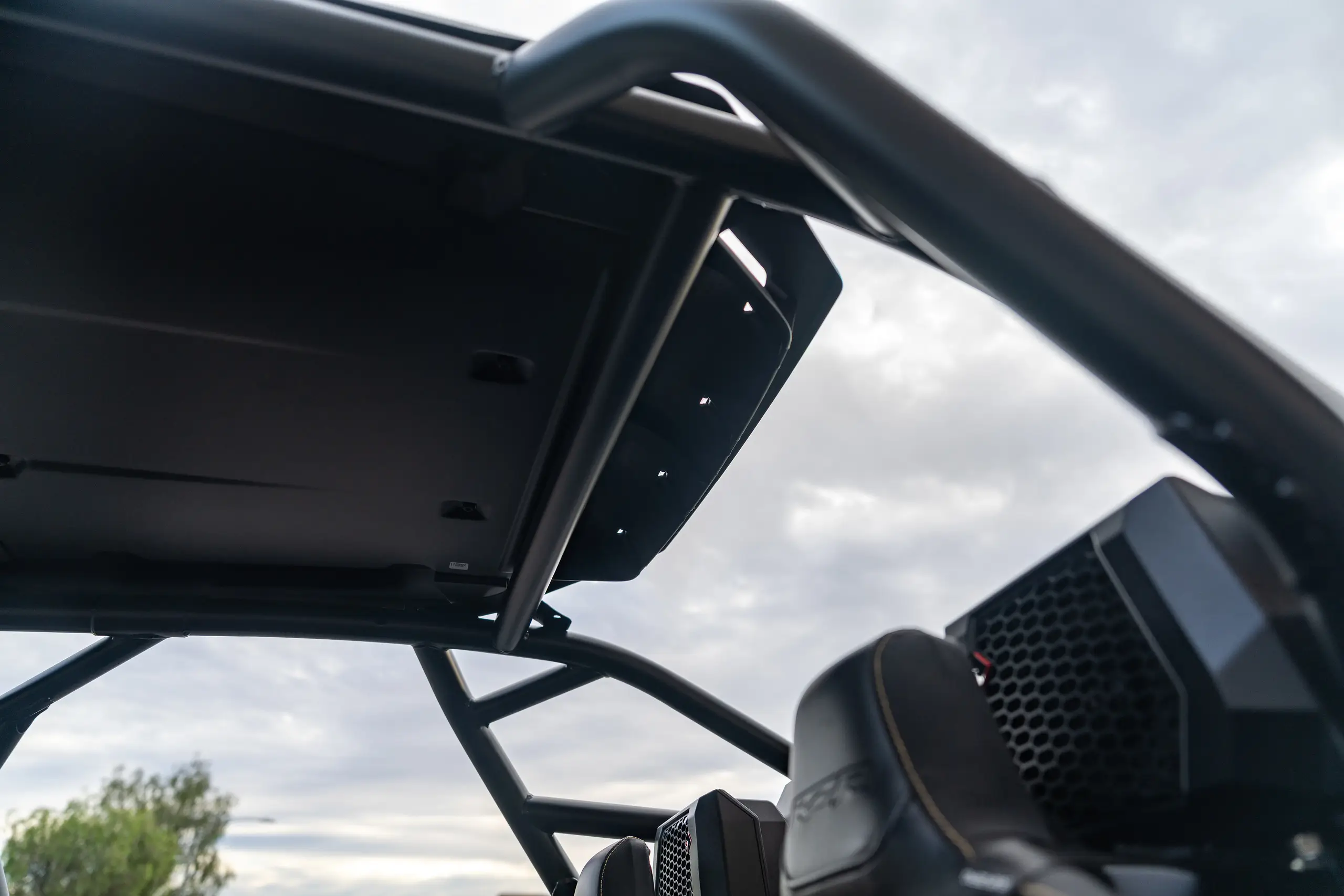
This is the question everybody's going to ask, so we asked the Polaris engineers directly. If you're running a windshield, you run the scoop.
The scoop is open at the back and curved. It pulls air in from the front and pushes it straight down into the radiator.
If you put on an aftermarket cage and don't run a windshield, you don't need the scoop. Polaris told us they did the testing, and the car pulls enough air coming straight in. There are also two fans behind it drawing air, so they don't expect any overheating without a windshield.
Polaris also includes the scoop on every Boost. If you want a windshield, you don't have to buy a windshield and a scoop. The factory cage by itself is the same as on the older cars.
Out Back: Intake, Turbo and Exhaust
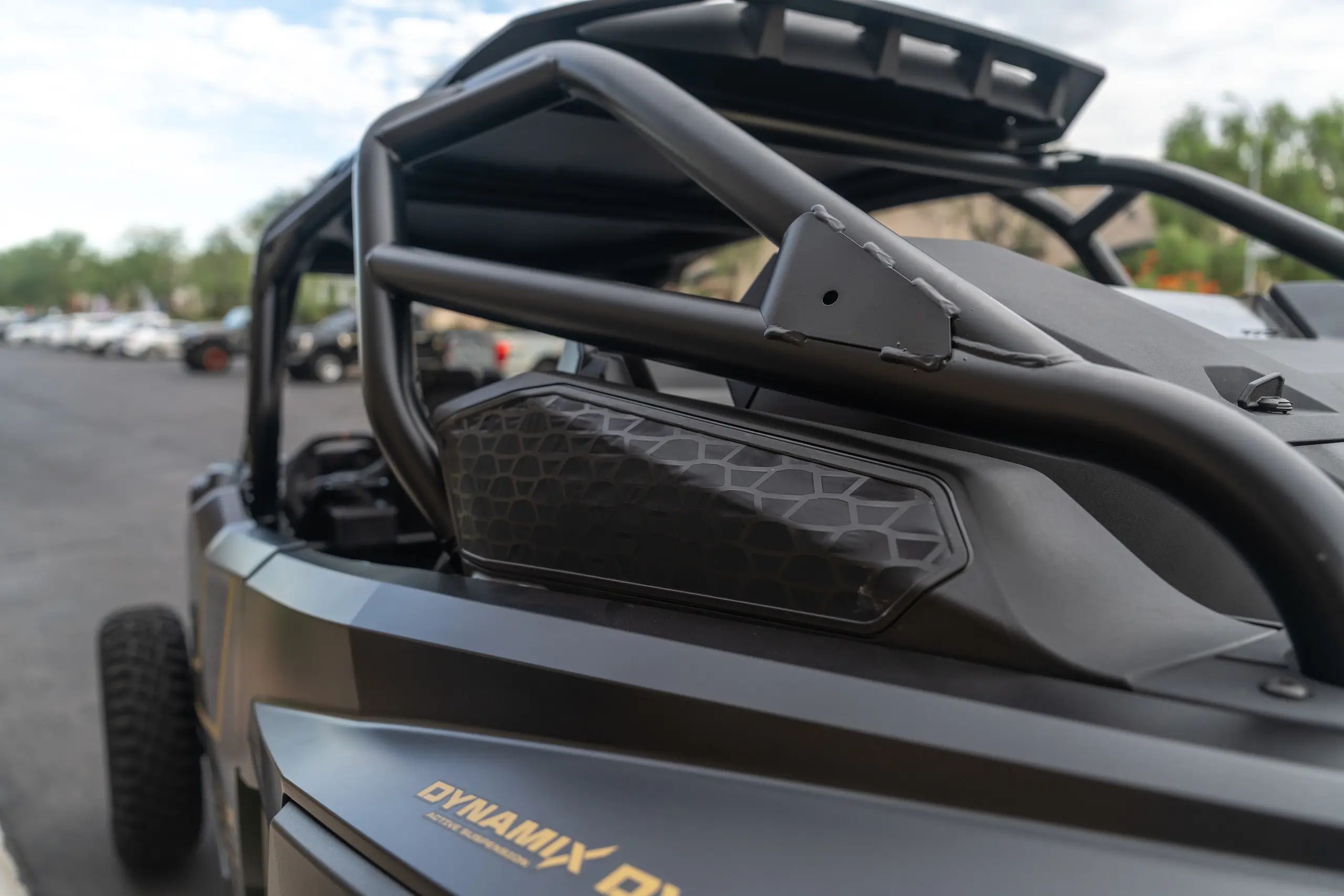
The back of the car is where the biggest changes are. The intake screens for the clutches and everything else back there are all different, and they look really good.
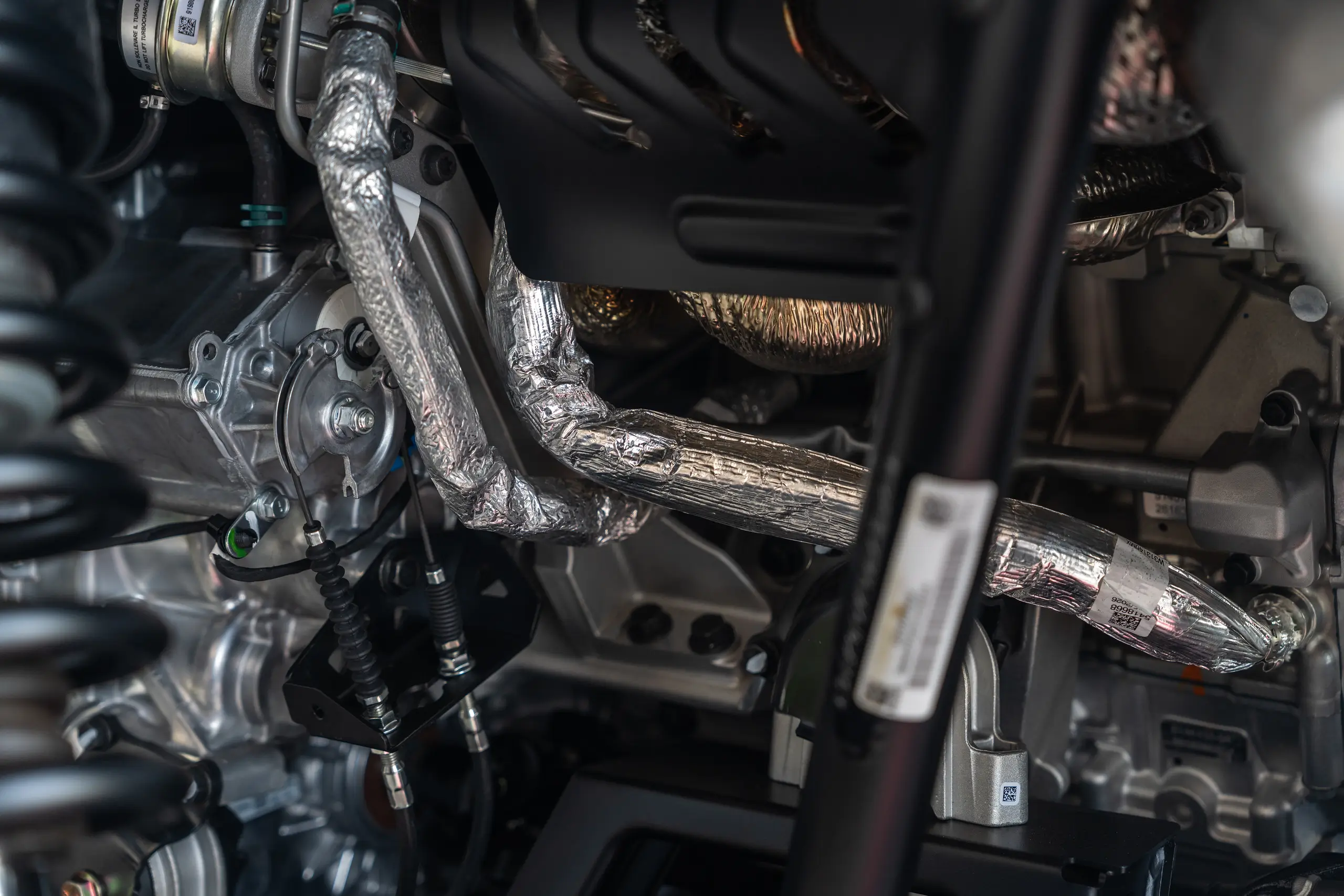
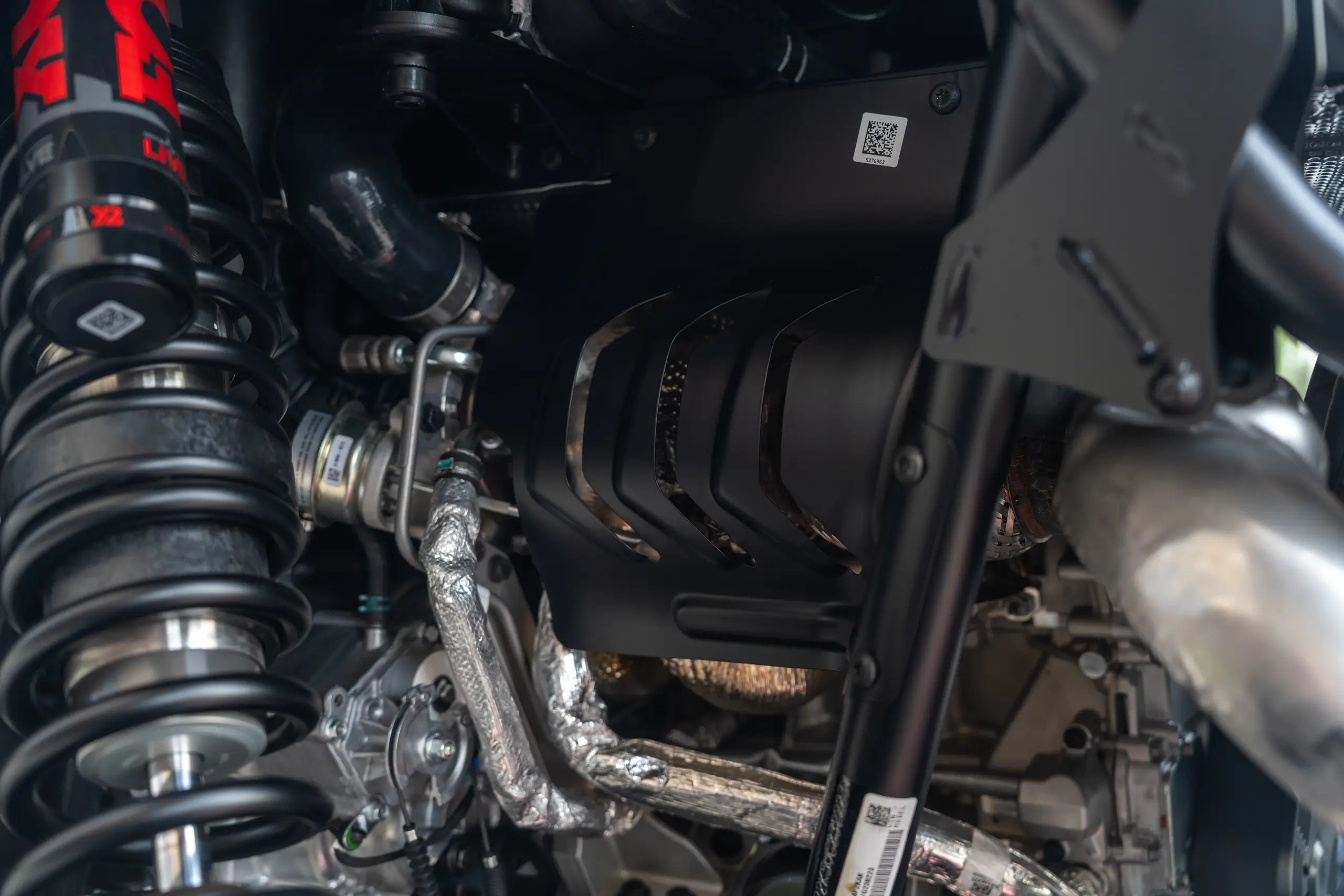
The coolest thing is obviously the turbo, tucked up nice and neat. Polaris added extra heat shielding and a huge head pipe, and the exhaust is different and looks great.
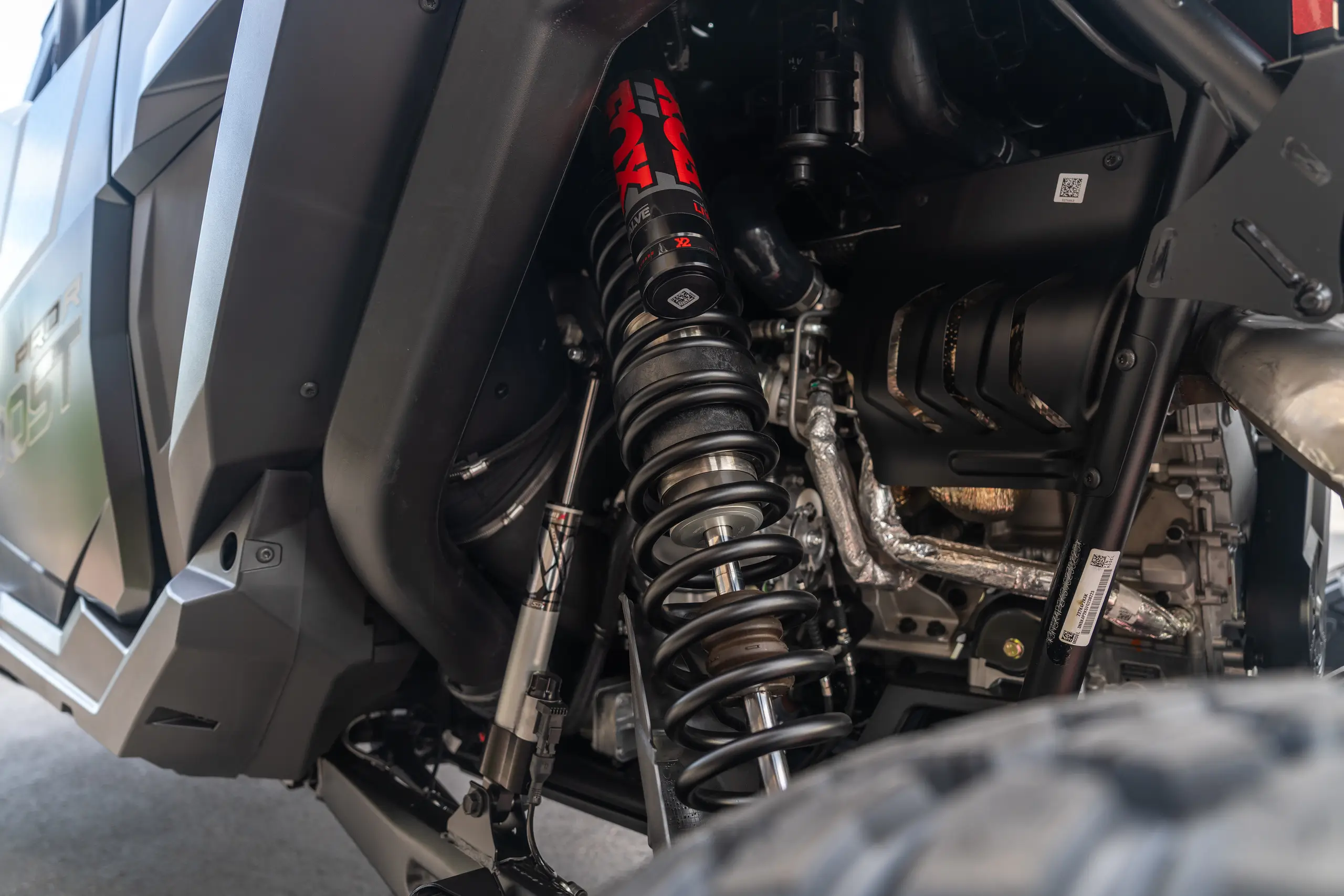
The shocks are the same on the outside but valved differently inside for the extra horsepower and the weight of the Boost. It also looks like Polaris reinforced the rear diff brackets, which we know have been an issue.
Cargo Box Storage
The cargo area isn't big, but Polaris already offers a storage box and a cooler for it. There's a little tailgate that folds down, so if you skip the box and just pack gear back there, the tailgate helps keep it in.
One thing the other cars don't have is a drain. If you're running the cooler, you can drain it right there. There are tie downs built in, and a new duct system back there was moving air when the car was running. We're not sure yet where that air is coming from, maybe residual air from the fans.
The ECU Protects the Engine
When we talked to the engineers about airflow, they made a point of how smart these cars are now. If the engine isn't getting enough air or starts getting hot, the car will pull back on the revs and let itself cool down before anything bad happens.
You don't want to do that on purpose. But if something weird happens and you're short on air, the computer is smart enough to protect the motor.
Polaris Didn't Just Slap a Turbo on a Pro R
From the side, it would be easy to think Polaris bolted a turbocharger onto a Pro R and called it a day. It's very far from that.
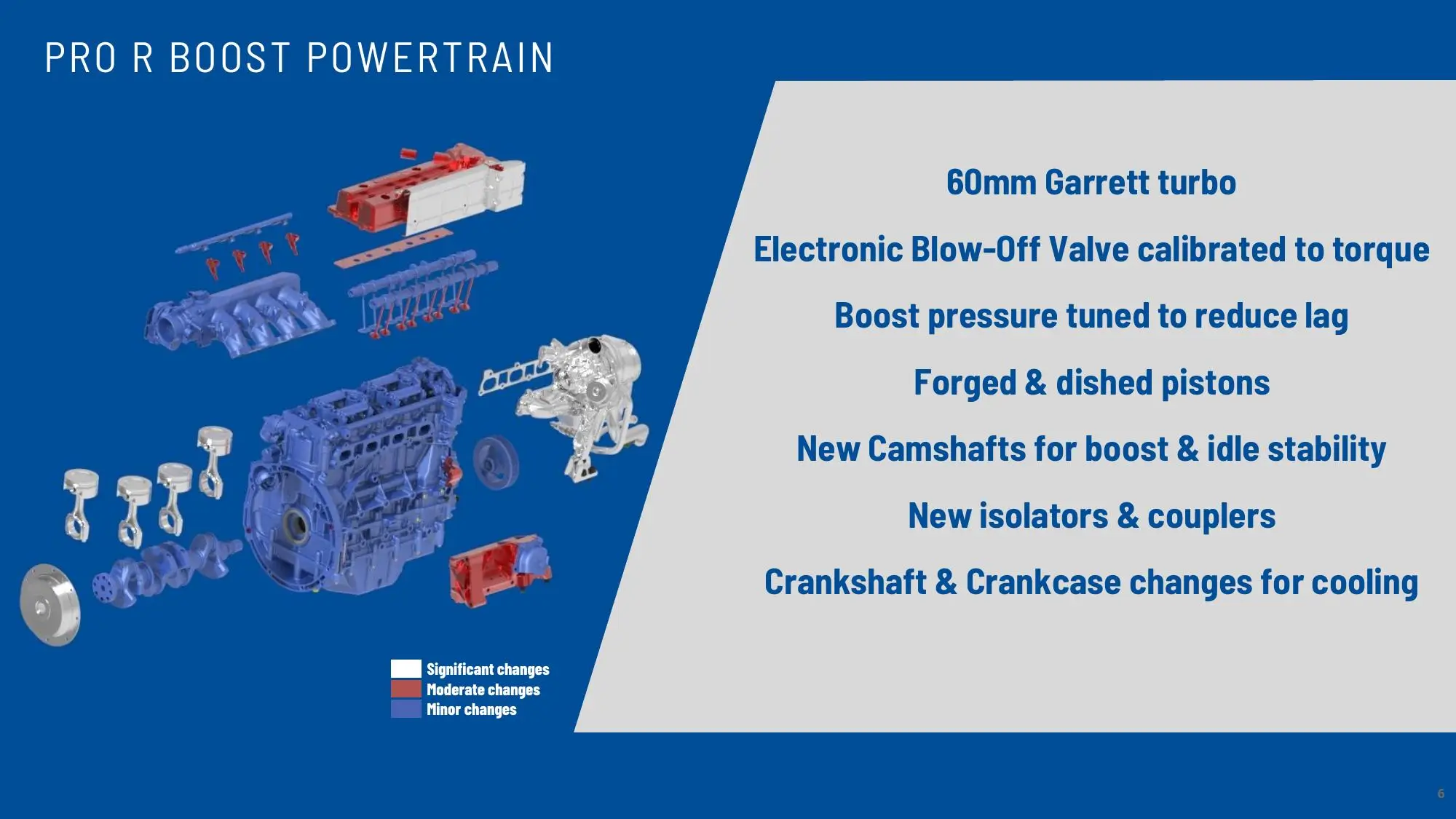
The Boost gets a new primary clutch, a new secondary clutch and a different belt than the regular Pro R. The transmission is new and stronger, and the PTL is gone. There are new, stronger front diffs and new, stronger drivelines. Inside the motor, Polaris changed a long list of parts, and you can see them in the powertrain chart further down. They built this car to handle a lot more horsepower.
How It Drives
It shifts really smooth, just like the new Xpedition. Whatever Polaris did with the clutching, this one shifts smoother than any other Pro R, and it sounds like a jet.
There's also a belt temp gauge now. In the Ride Command gauges, you can check your belt temperature. We don't think belt issues will be a problem on this car, since stock Pro Rs don't have belt issues either and Polaris did the testing. It's still nice to know where your belt is temperature-wise.
Our Take on the 2027 Pro R Boost
Polaris killed it and stepped it up again. We're black and gold guys forever, so the color combo works for us, and everything about this car is awesome.
We're building it as our show car, and it'll be at the Rugged Radios DIRT EXPO powered by DRT Motorsports, December 4-6 at WestWorld of Scottsdale. If you're in Phoenix and want to see it before then, the car will be in and out of the shop for a while, so give us a call. We'll put more miles on it and let you know what we think.
2027 Pro R 4 Ultimate vs. Pro R 4 Boost Ultimate Specs
All numbers come from Polaris.
| Spec | 2027 Polaris RZR Pro R 4 Ultimate | 2027 Polaris RZR Pro R 4 Boost Ultimate |
|---|---|---|
| Engine | 1,997cc 4-cylinder | 1,997cc turbocharged 4-cylinder |
| Horsepower | 225 hp @ 8,250 rpm | 275 hp @ 7,000 rpm |
| Torque | 153 lb-ft @ 7,500 rpm | 223 lb-ft @ 6,000 rpm |
| Upshift RPM | 8,250 rpm | 7,200 rpm |
| Rev limit | 8,500 rpm | 8,500 rpm |
| Top speed | 85 mph | 90 mph |
| Overall length | 165.5" | 165.5" |
| Overall width | 74" | 74" |
| Overall height | 76.5" | 80.1" |
| Wheelbase | 133.5" | 133.5" |
| Ground clearance | 16" | 16" |
| Dry weight | 2,663 lbs | 2,824 lbs |
| Cargo box capacity | 300 lbs | 150 lbs |
| Fuel capacity | 17.4 gal | 17.4 gal |
| Tires | Trekker 32" | Trekker 32" |
| Prewired for Dynamix DVS | Yes | Yes |
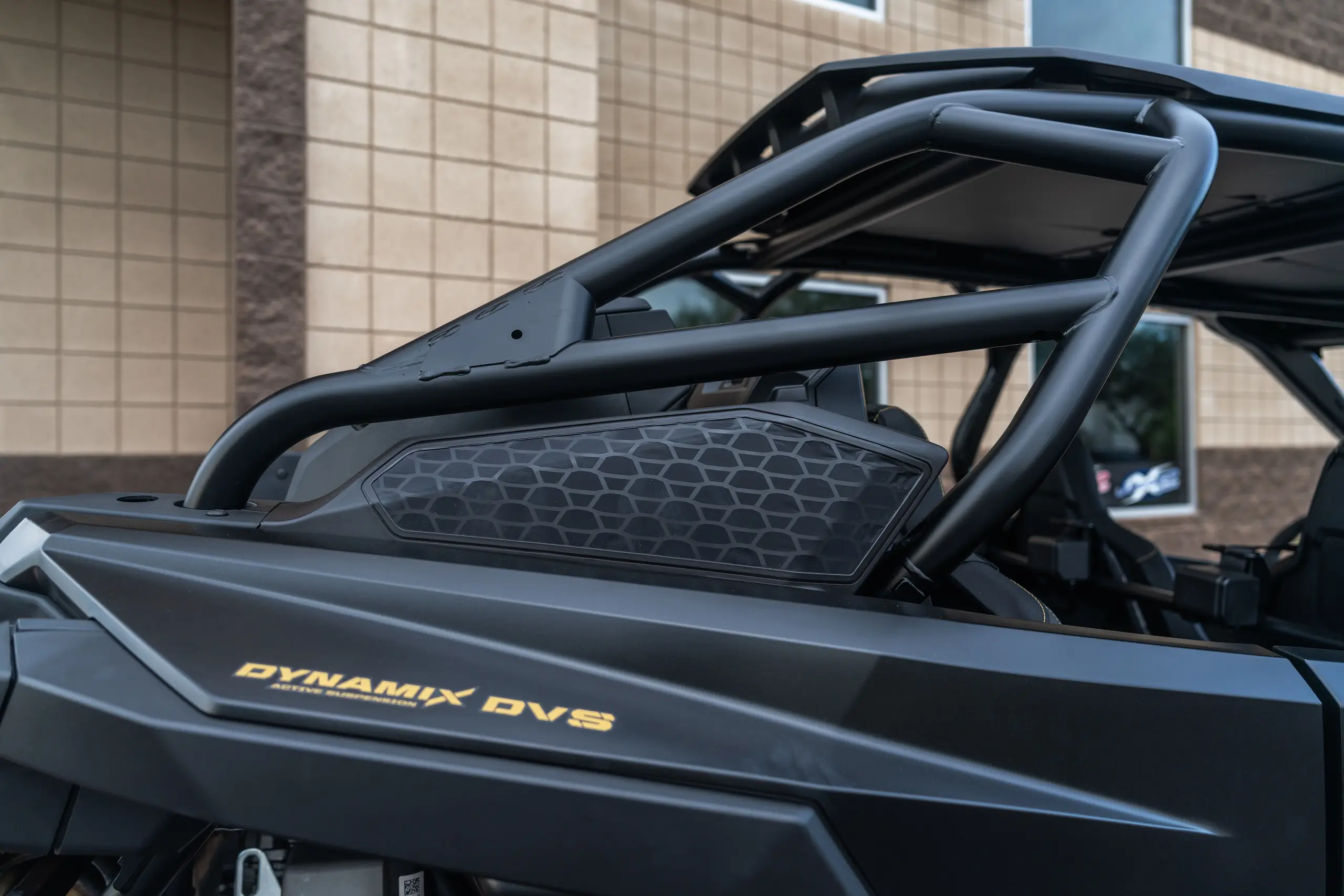
Our shop car is the Pro R 4 Boost Ultra. Compared to the Ultimate, the Ultra comes in Matte Crystal Black, runs BFGoodrich 32" tires instead of Trekkers, and gets Dynamix DVS active suspension from the factory. Every 2027 Pro R and Pro R Boost is prewired for DVS, so you can add it to an Ultimate later.
Power, RPM and Noise
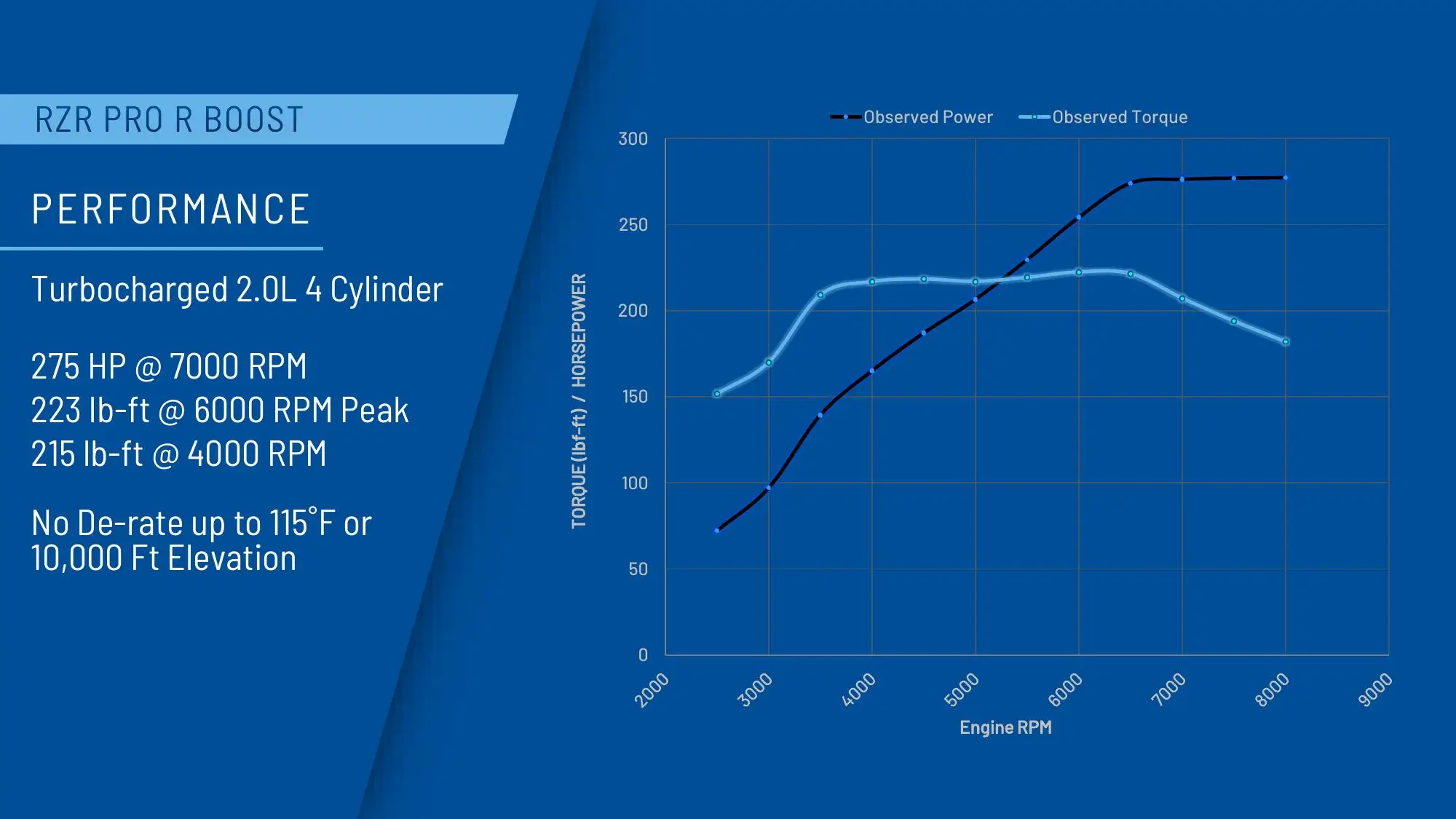
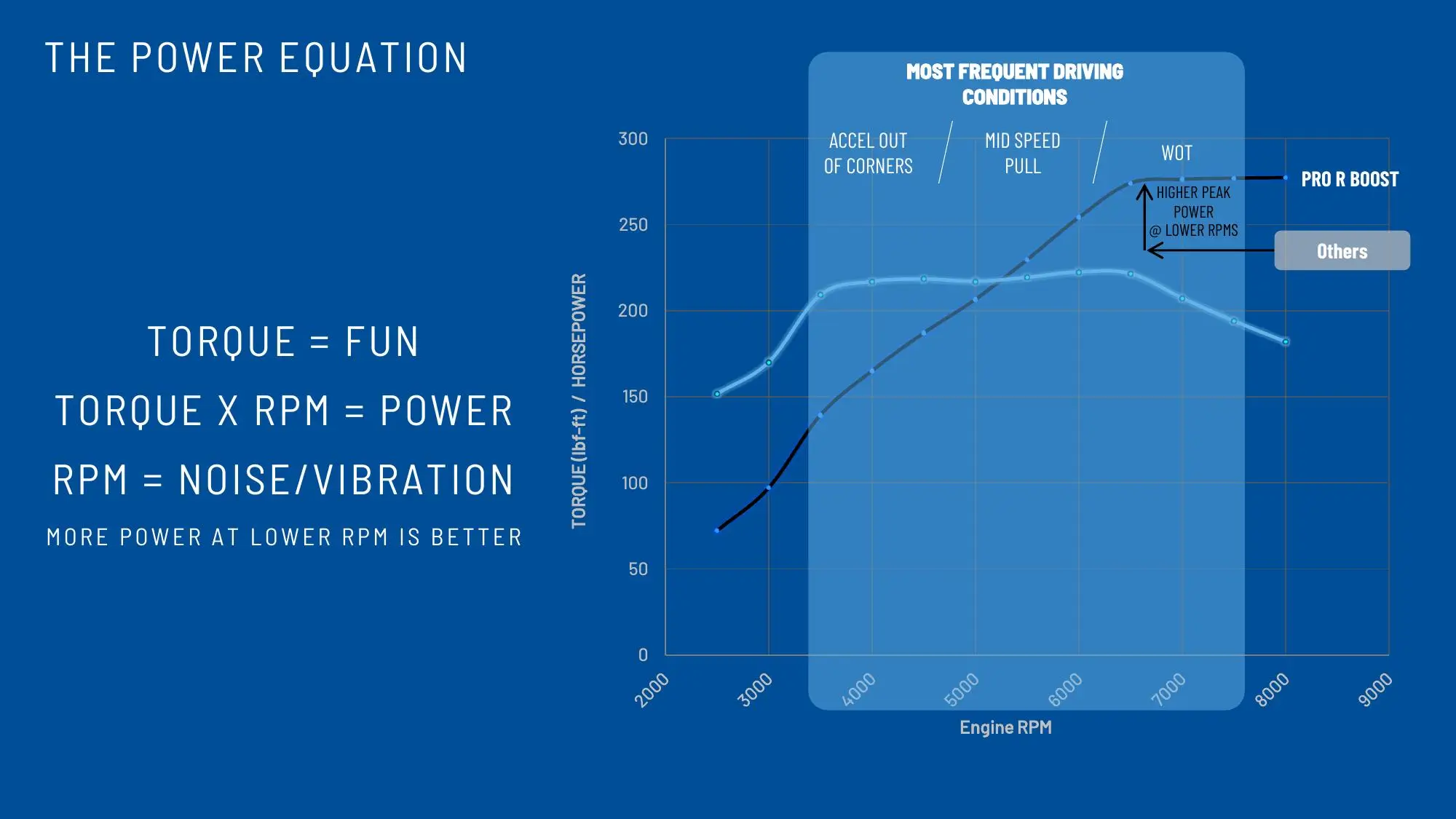
The Pro R Boost makes 275 hp at 7,000 rpm and 223 lb-ft of torque at 6,000 rpm. Down at 4,000 rpm it's already making 215 lb-ft, which is about 97% of peak torque. Polaris rates it with no de-rate up to 115°F or 10,000 feet of elevation.
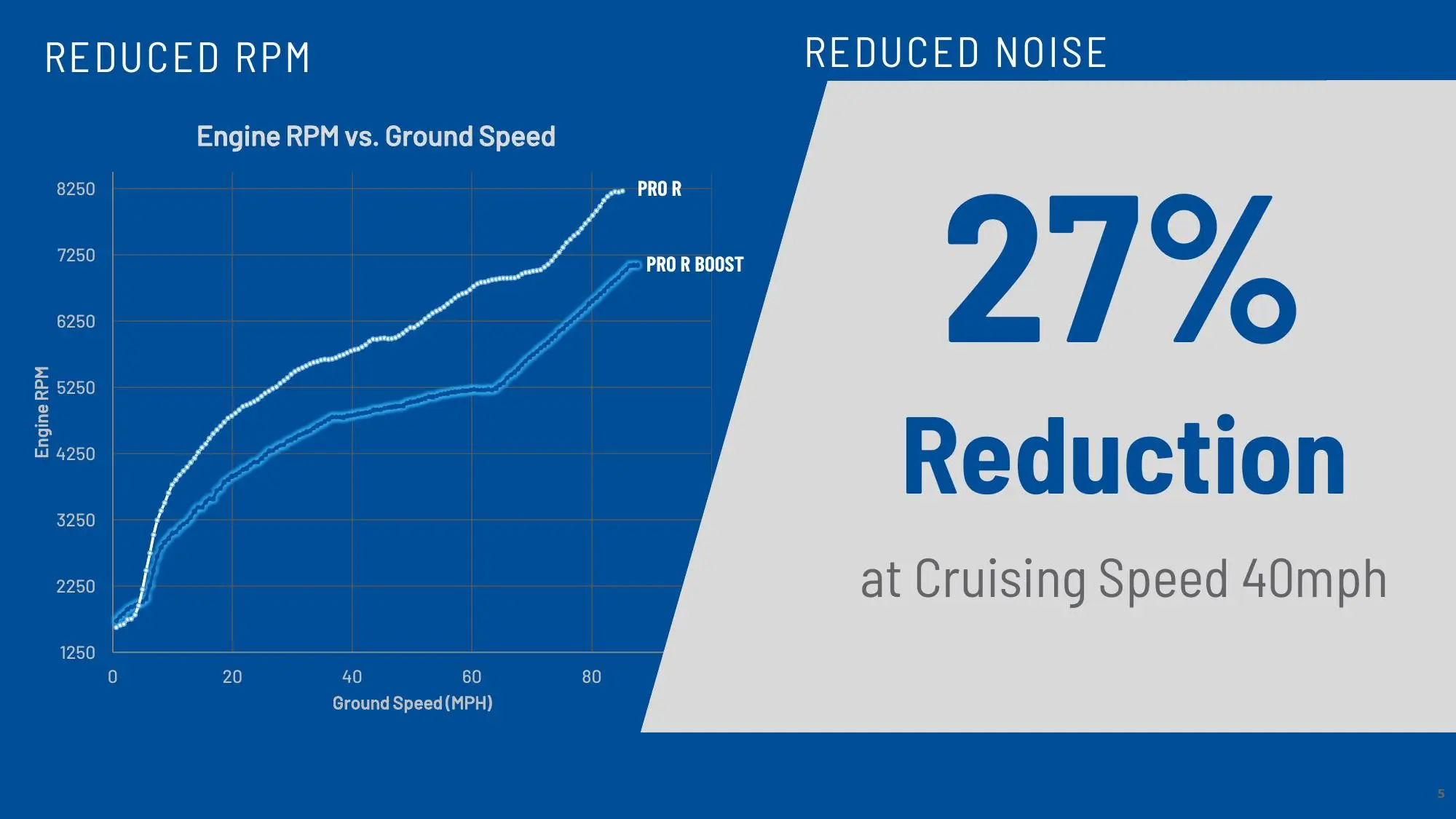
It upshifts at 7,200 rpm instead of 8,250 on the Pro R. Polaris measured a 27% reduction in noise at a 40 mph cruise compared to the Pro R.
The last chart in this gallery is the one we mention in the video. It shows every engine part Polaris changed for the Boost.
2026 to 2027 Changes: Pro R vs. Pro R Boost
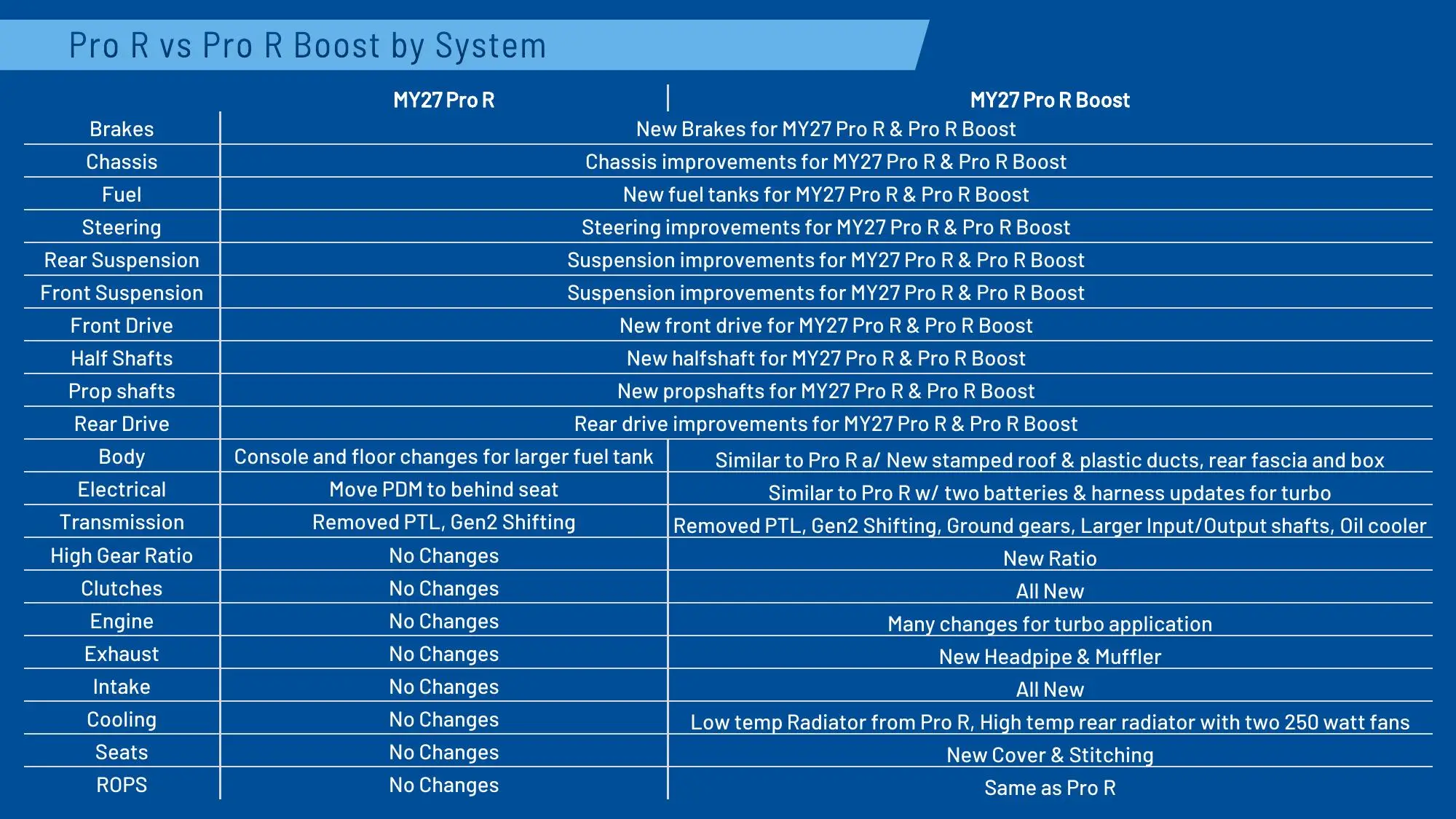
The 2027 Pro R column lists what changed from the 2026 Pro R. Most of the chassis and driveline upgrades went into both cars, and "carries over from 2026" means that system didn't change on the regular Pro R.
| System | 2027 Polaris RZR Pro R | 2027 Polaris RZR Pro R Boost |
|---|---|---|
| Brakes | New dual-piston calipers with better fade resistance | New dual-piston calipers with better fade resistance |
| Chassis | Updated for the larger fuel tank, seat base and new front drive mount | Updated for the larger fuel tank, seat base and new front drive mount |
| Fuel tank | 17.4 gal on the 4-seat (up from 12.3), 14.7 gal on the 2-seat (up from 12) | 17.4 gal on the 4-seat, 14.7 gal on the 2-seat |
| Steering | 3-piece tie rods for higher buckling strength | 3-piece tie rods for higher buckling strength |
| Front suspension | Larger upper ball joint, new knuckle, 7/8" shock clevis thread (up from 5/8"), Fox quiet spring couplers | Larger upper ball joint, new knuckle, 7/8" shock clevis thread, Fox quiet spring couplers, plus Boost-specific springs, valving and Dynamix calibration |
| Rear suspension | Serrated sphericals, stiffer stabilizer bar, Fox quiet spring couplers | Serrated sphericals, stiffer stabilizer bar, Fox quiet spring couplers, plus Boost-specific springs, valving and Dynamix calibration |
| Front drive | Larger ring and pinion, 31-tooth output splines (up from 28), 2 extra mounting points | Larger ring and pinion, 31-tooth output splines, 2 extra mounting points |
| Half shafts | Stronger half shafts | Stronger half shafts |
| Prop shafts | Stronger prop shafts with a pinch bolt instead of a roll pin | Stronger prop shafts with a pinch bolt instead of a roll pin |
| Rear drive | Stronger hubs | Stronger hubs |
| Body | New floor and center console for the larger fuel tank | New floor and center console, stamped aluminum roof, roof scoop, plastic ducts, new rear fascia and cargo box |
| Electrical | PDM moved behind the seat, better grounding, tethered fuse panel cover | PDM moved behind the seat, better grounding, tethered fuse panel cover, two batteries and a turbo wiring harness |
| Transmission | PTL removed, Gen 2 RC shifting with up to 40% less shift effort | PTL removed, Gen 2 RC shifting, ground gears, stronger input and output shafts, integrated oil cooler, 2X oil capacity |
| High gear ratio | Carries over from 2026 | New 9.59 ratio for lower RPM |
| Clutches and belt | Carries over from 2026 | All new: 330mm secondary, larger belt, 5 cooling ducts, belt temp monitor |
| Engine | Carries over from 2026: 2.0L, 225 hp | Turbocharged 2.0L, 275 hp: forged pistons, new cams, sodium-filled exhaust valves, 9.8:1 compression |
| Turbo | None | 60mm Garrett turbo with ECU-controlled internal bypass |
| Exhaust | Carries over from 2026 | New 3" head pipe and outlet, new spark arrestor, extra muffler mount |
| Intake | Carries over from 2026 | All new, with a Donaldson PowerCore filter that lasts 2X longer |
| Cooling | Carries over from 2026 | 3-core rear radiator with two 250 W fans, front radiator for the charge cooler and transmission |
| Seats | Carries over from 2026 | New covers and stitching |
| Roll cage (ROPS) | Carries over from 2026 | Same roll cage as the Pro R |
What Polaris Changed, System by System
Where a part is compared to "the 2026 Pro R," the 2027 Pro R got that same upgrade too.
Engine
- 275 hp at 7,000 rpm, with no de-rate up to 115°F or 10,000 feet
- 223 lb-ft at 6,000 rpm, and 97% of that torque at 4,000 rpm
- Forged, dished pistons
- Connecting rod length change
- 9.8:1 compression ratio for boost
- Indexed cams for boost with less valve overlap
- Sodium-filled exhaust valves
- High flow injectors
- Pro XP and Pro S spark plugs
- Crankshaft counterweight machining changes
- Engine block machining for oil and cooling lines
- New oil feed and return lines for the turbo. Oil drains back naturally at any angle a RZR sees and returns to the front cover for better scavenging
- High flow breather system
- Engine coupler retuned with stiffer springs
- Better damping on the engine mounts
- New shield on the valve cover for the turbo
- Boost pressure varies with torque demand
Turbocharger
- Garrett turbo sized for the 2.0L ProStar engine
- 60mm G-series compressor wheel and 59mm turbine wheel
- Mono-scroll turbo and manifold in one integrated package, with an MLS exhaust gasket
- Thermal wrap shield on the integrated manifold to keep heat off nearby parts
- Journal bearings with higher thrust capacity than earlier Garrett generations
- Internal bypass controlled by the ECU instead of the traditional throttle-based blow-off valve on the Pro XP. Boost pressure recovers faster, and boost control can change by drive mode
- Holds its boost up to 10,000 feet of elevation
Clutches and belt
- Upshift at 7,200 rpm vs. 8,250 rpm on the Pro R
- Clutch engagement at 1,600 rpm
- New belt with a larger cross section
- Larger secondary clutch: 330mm vs. 290mm on the Pro R
- 48 fins on the secondary vs. 36 on the Pro R
- New 250mm moveable sheave on the drive clutch
- New helix with a parallel track to get rid of clunk
- 5 clutch ducts vs. 3 on the Pro R (3 intake, 2 exhaust), for 30% more airflow
- Belt temp monitor
- New clutch box, not backwards compatible with the Pro R
- Same service intervals as the Pro R: belt at 1,000 miles, clutch at 2,000 miles
Transmission
- PTL removed, made possible by the stronger driveline downstream (also on the 2027 Pro R)
- Gen 2 RC shifting with up to 40% less shift effort (also on the 2027 Pro R)
- 2X the fatigue life of the Pro R transmission
- Ground gears to cut noise and vibration
- 9.59 high gear ratio to lower RPM
- New integrated oil cooler that drops oil temperature up to 150°F
- New AGL Extreme oil and 2X the oil capacity of the Pro R
- New PTO and output seals for longer life
- Integrated, race-inspired PTO vent
- Stronger input and output shafts
Front drive
- Larger ring and pinion gears with larger bearings
- 31-tooth output splines (28 on the 2026 Pro R)
- 26-tooth input splines (25 on the 2026 Pro R)
- Rigid mounting with 2 extra mounting points
Prop shafts, half shafts and rear drive
- Stronger half shafts and prop shafts
- Pinch bolt instead of a roll pin for a stronger input shaft
- Stronger rear hubs
Brakes
- Dual-piston calipers with better fade resistance, shared with the Pro R and Pro S
Front suspension
- Larger upper ball joint
- New knuckle for the new joint and brakes
- New springs and tune for the Pro R Boost
- New shock valving and Dynamix DV/DVS calibration
- Shock clevis thread into the shaft increased from 5/8" to 7/8"
- Fox quiet spring crossover couplers
- Prewired for sway bar links, so any Dynamix DV car can be upgraded to DVS
Rear suspension
- Serrated sphericals for better rear alignment stability
- New springs and tune for the Pro R Boost
- New shock valving and Dynamix DV/DVS calibration
- Stiffer, larger diameter stabilizer bar
- Fox quiet spring crossover couplers
Steering
- 3-piece tie rod instead of 2-piece for higher buckling strength
Cooling
- High temp radiator in the back cools the engine and turbo. It's a 3-core radiator about 3" thick with two 250-watt fans
- Low temp radiator in the front cools the charge air cooler and the transmission, with the 250-watt fan carried over from the Pro R
- New liquid-to-air charge cooler behind the close-off panel
- Shared coolant bottle, and the charge cooler pump is shared with the Pro S and Pro XP
Intake
- Donaldson PowerCore filter with 2X the filter life, inspired by racing
- In-mold screen instead of Frogzskin, with a serviceable upper bezel
- Larger bezels for more airflow
- Pulls cleaner air from a better spot at the back of the car
- Quieter at the driver's ear
Exhaust
- New 3" routing with a new 3-bolt joint and a larger 3" outlet to cut flow noise and backpressure
- New spark arrestor and outlet design
- Extra lower muffler mount for durability
Fuel
- 17.4 gallons on the 4-seat (12.3 on the 2026 Pro R 4)
- 14.7 gallons on the 2-seat (12 on the 2026 Pro R)
- Easier access to the fuel pump
Electrical
- Two batteries to handle the turbo's extra electrical needs
- More efficient grounding
- PDM moved behind the seat, out of wheel spray
- New tethered fuse panel cover that's easier to remove
Body and seats
- New stamped aluminum roof and plastic scoop
- New shroud for the rear radiator
- New floor and center console to fit the fuel tank
- In-mold fenders
- Removable seat bun on the rear seats
- New seat covers and stitching
Calibration
- Idle bumps to 1,450 rpm in race mode (1,250 normal) to spin the turbo up for launches
- Recirculation valve keeps boost up after you lift off the throttle
- Radiator fan runs at low speed to push hot air out of the cab without adding noise
- New turbo software for better control, with boost control that changes by drive mode
Technology and display
- 10.4" touchscreen with new map formatting
- Rockford Fosgate Stage 4 digital audio
- Dynamix DVS on the Ultra, and every 2027 Pro R and Pro R Boost is prewired for the DVS accessory kit
- Wired CarPlay is coming in a later software update
Accessories
- Works with the RZR XP bed storage (cooler and dry storage)
- Tire carrier that works with the rear cooling and storage
- New light bar that works with the roof scoop, plus new pod lights
- New rear subwoofer with a bass control knob
- Carbon fiber hood and interior bezels
Roll cage (ROPS)
- No changes from the Pro R
Got Questions About the Pro R Boost?
Leave a comment on the video or send us a message. We still have contacts at Polaris from our racing days, so if you've got a very specific question, we'll do what we can to get it answered.
Want to see Polaris's own presentation on the car? Download the 2027 RZR Pro R Boost product presentation (PDF).
When you're ready to start building yours, check out our Pro R Boost parts or reach out anytime.

